Remember
Order
Centenary of Horea Popescu, a prominent figure on the Romanian stage
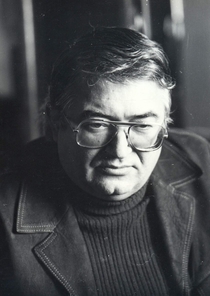
24 January 2026It has been 100 years since the birth of a prolific theater and film director, artistic director of the National Theater in Bucharest for over two decades, Horea Popescu (January 25, 1926 - January 24, 2010). He was born on January 25, 1926, in the town of Zlatna, Alba County. He studied at the Andrei Saguna High School and obtained a degree in Law and a diploma in directing from the Institute of Theater and Cinematographic Art. He worked at the C.F.R. Giulesti Theater and the "I.L. Caragiale" National Theater, where he was artistic director for 22 years. He has directed approximately 70 plays and 5 feature films, being recognized for his adaptations of famous authors. An emeritus artist, distinguished with numerous awards, he was decorated with the Medal of Labor and the National Order of Faithful Service. In 2003, he was awarded the Lifetime Achievement Award by UNITER. The Cultural Center in Zlatna has been named after him since 2021. Throughout a career spanning six decades, with approximately one hundred productions staged, including the set design for some of them, Horea Popescu, a director with a vast culture and refined artistic taste, has established himself as one of the architects of monumental theater. Critic Valentin Silvestru remarked about his shows: They have an unmistakable style, embodied in what I would call "simple monumentality." He was also considered one of the most innovative directors of his time. In 1968, he was appointed artistic director of the National Theater in Bucharest, at the request of general director Zaharia Stancu. He remained artistic director for over 22 years. After 1990, he continued his work as director of performing arts institutions in the Ministry of Culture. Among his numerous artistic achievements, we will mention a few notable productions: Death of an Artist by Horia Lovinescu, Danton by Camil Petrescu, the only stage adaptation of the monumental play, Caligula by Albert Camus, The Foundation by Antonio Buerro Vallejo, One Flew Over the Cuckoo's Nest by Dale Wasserman, The Bathhouse and The Bedbug by V. Mayakovsky, Richard III by W. Shakespeare, Miss Nastasia by G. M. Zamfirescu, Becket by Jean Anouilh, Titanic Waltz by Tudor Musatescu, Coana Chirita by Tudor Musatescu after Vasile Alecsandri, The Cat on New Year's Eve by D. R. Popescu, The Legacy by Titus Popovici, Avram Iancu by Lucian Blaga, Ondine by Jean Giraudoux, etc. Also at the National Theater in Bucharest, after the revolution, he staged Sheridan's "The Rivals," Dušan Kovačević's "The Professional," directed and designed, which won an award at the Festival of Original Serbian Plays in Novi Sad in 1996, Arthur Miller's Death of a Salesman, directed, designed, and adapted in 2000, and Dušan Kovačević's The Other Land in 2002 (the last production at the National Theater of Bucharest). In his performances, staged mainly at the National Theater in Bucharest, but also on stages across the country and abroad, Horea Popescu always created an atmosphere, developed a universe. Born of an inexhaustible imagination, a keen sense of proportion, and a unique mastery of the stage, his productions have always been inventive, full of verve, color, suggestion, drama, and meaning, and have consistently enjoyed resounding public success. Horea Popescu was also the author of several successful films, such as Omul de langa tine (The Man Next to You), De trei ori Bucuresti (Three Times Bucharest), Dragoste lunga de o seara (A Night-Long Love), Cuibul de viespi (The Hornet's Nest), and Moartea unui artist (Death of an Artist), which were inspired by theater, the first based on Gaitele by Al. Kiritescu and the other on the play of the same name by Horia Lovinescu. He also produced television performances such as: Balcescu after Camil Petrescu, Titanic Waltz after Tudor Musatescu, The Professional after Dušan Kovačević, etc. Horea Popescu, an emblematic figure of Romanian theater, had his own vision of the world of performance and gave this vision structure, life, and dramatic expression. His work cannot be assimilated into a particular genre, but rather into a theatrical universe distinguished by its original style and the powerful unity of its performances. Translated by Andreea Codrea-Boeriu
George Motoi - Under the Actor’s Mask
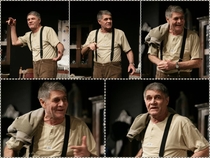
04 March 2020On Wednesday, March 4th, 2020, from 6:00 pm, the Media foyer (wing from Tudor Arghezi street) will host an event dedicated to commemorating the actor George Motoi. The event continues the series of evocations of personalities of the Romanian theatre, a series started in January, with the one dedicated to master Marin Moraru, under the title "We Are Made from the Matter of Our Memories".This time, "Under the Actor's Mask", colleagues, admirers, spectators who once applauded George Motoi will meet, dedicating an evening in which the memories will be supported by an exhibition of representative photographs from the actor's career. The event will be moderated by theatre critic Doina Papp. The exhibition remains open until the end of March. Free entry. George Motoi was born in the winter of 1936, in Caliacra. Shortly thereafter, the Cadrilater was transferred to Bulgaria, and his father, the gendarmerie chief, was transferred with his family to a village in Bărăgan, very close to Braila. The father would have wanted a military career for his son. His mother was a housewife and very faithful. He often went to church. Little George gets to say prayers and sing in the church choir. Later he would discover the school holidays and turn them into real shows of his little universe. "I have only been guided by the idea to satisfy this witness without which my profession is useless: the public. I, without an audience, do not exist. ''In 1954, he began his studies at the Institute of Theatre and Film in Bucharest at Prof. Irina Răchiţeanu. He is then assigned to Piatra Neamt where he founded what is now the Youth Theatre. He played at the Theatre of Bacau, at the Cluj National Theatre (which can be seen in his portrayal of Caligula, after the eponymous play by Albert Camus, under the directorial wand of Vlad Murgu). From 1972 to 2007, he could be seen on stage at the "I.L. Caragiale" National Theatre of Bucharest in shows such as Danton (1974), Richard III (1976) , Vlaicu Vodă (1982), One Flew over the Cuckoo’s Nest (1983), The Dance of the Evil Fairies (1986), The Name of the Rose (1998), My Sweet Lady, My Beloved Eminus - adaptation and direction by himself (2002), The Passions of Saint Thomas Aquinas (2005) or Saturday, Sunday, Monday (2006.)His film career includes at least 45 main roles. He has starred in dozens of television shows. He wrote Under the Actor's Mask, Orion Publishing House, 2006 and New Stage Versions after Old Plays, Coresi Publishing House, 2010, 2 volumes) and he also directed.George Motoi, a special personality of the Romanian theatrical and cinematographic culture, was awarded by the authorities with the Labour Medal, the “Cultural Merit” Medal and the “Third Class Cultural Merit” Order. He is also an honorary citizen of Brăila.He stated about himself that he has an immense quality. That of forgetting all the texts and making room for the new ones. A versatile actor who knew how to pass the test of time and how to survive artistic obsessions. "I do not think it is another natural obsession, truer for an artist than to know yourself useful and to hope or especially to believe that you have the ability and to answer this need for usefulness. At least that is my turmoil and not that of pursuing a certain career, certain places, certain directors." Translated by Simona Nichiteanu

We Are Made from the Matter of our Memories
31 January 2020The "I.L. Caragiale" National Theatre of Bucharest launches a series of events dedicated to theatre people who have chosen to dedicate their lives to the stage and to the audience. A first such event is scheduled on Friday, January 31st, 2020, when 83 years since the birth of actor Marin Moraru are celebrated. He was amused when someone referred to him as a role model. All his childhood friends called him Marinus. He worked with conviction and considered the job chosen as the most beautiful. He has never missed a rehearsal and the proof of his love for the actor’s profession was the 55 years offered to the stage and screen. He graduated from the Institute of Theatre and Cinematographic Art, at Mrs. Dina Cocea's class, in 1961. He performed on the stage of the Youth Theatre from 1961-1964, at the Comedy Theatre 1965-1968, then at the "Lucia Sturdza Bulandra" Theatre between 1968- 1971, and at the "IL Caragiale" National Theatre of Bucharest, he worked from 1971 to 1974, after which he taught at the Institute as a university lecturer, until 1980. In the same year, he returns to the National stage where he will perform until 2014. He was decorated in 2008 by the President of Romania with the National Order of the Faithful Service to the rank of Great Cross. In the same year, he received the title of Honorary Doctor of the University of Theatrical and Cinematographic Art. In direct competition only with himself, his theatrical career has often been doubled by his film career. Marin Moraru was a unique personality who left behind an impressive number of roles in theatre and film as a legacy. He had a sense of humour of his own and regarded marriage as an act of will, admitting the emergence of temptations for colleagues cast in main roles rather than himself, who performed, above all, composition roles. He was married for 52 years to Lucia Popescu - Moraru, programme director and music editor at Radio Romania Actualitati. Perhaps we should not be afraid to use the past, especially when we are able to find resources for it in the future. We are waiting for you on Friday, January 31st, 2020, from 6:00 pm at Librarium (the bookstore behind the NTB Ticket Office) to rebuild memories. We also have costumes and props from the National Theatre Museum. The event will be attended by Lucia Popescu Moraru, Dorina Lazar, Marian Ralea, Mihai Calin, Monica Davidescu, Vladimir Gaitan, George Mihaita, Constantin Cotimanis, Simona Bondoc, Traian Stanescu. The discussion will be moderated by journalist Maria Capelos. You are most welcome at the Theatre! Translated by Simona Nichiteanu