Spectacles
The Word Father - NETA
by Gabriele Vacis

The Word Father - NETA
by Gabriele Vacis
Premiere: 01.09.2015
Duration: 1 h 30 min / Pause: No
The performance will be presented in the NETA International Theatre Festival by The Koreja Cantieri Teatrali, Lecce, Italy.
The show will have subtitles in romanian and english
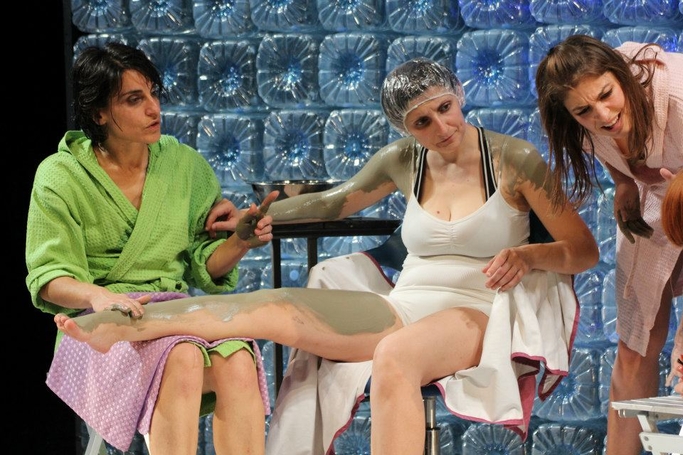
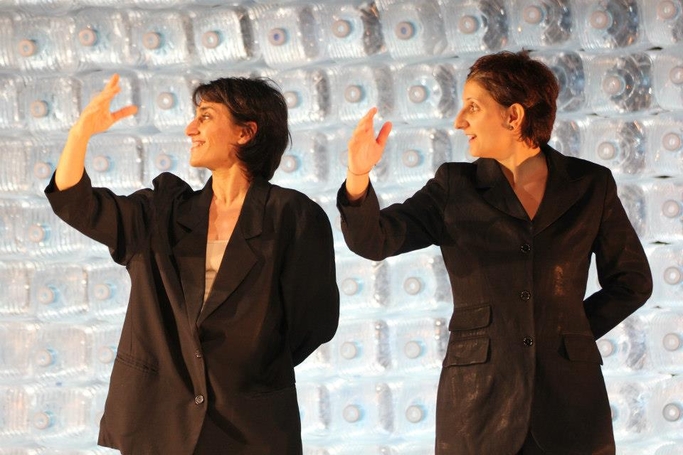
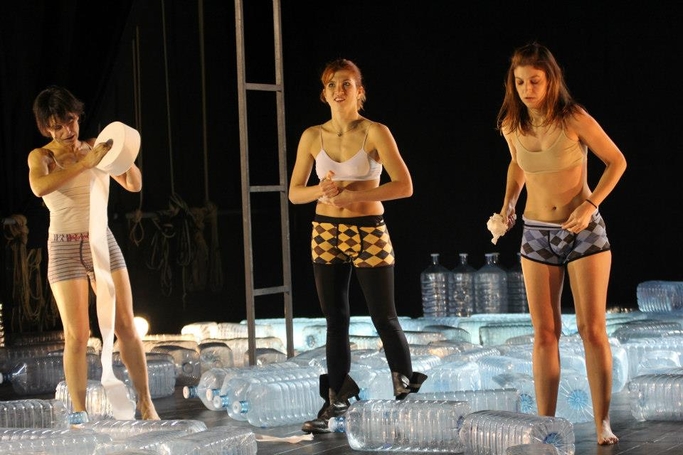
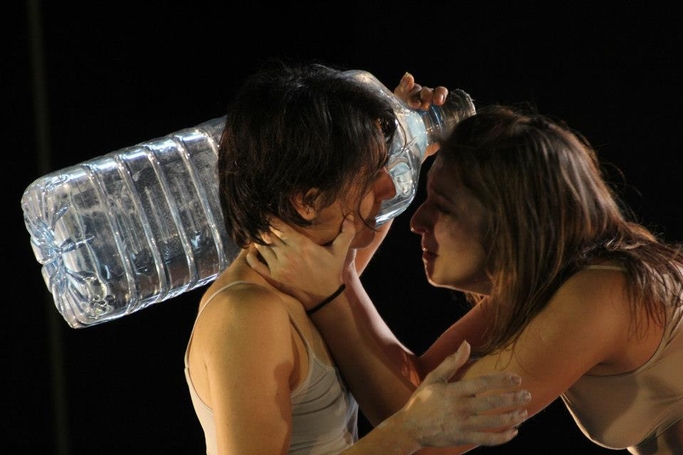
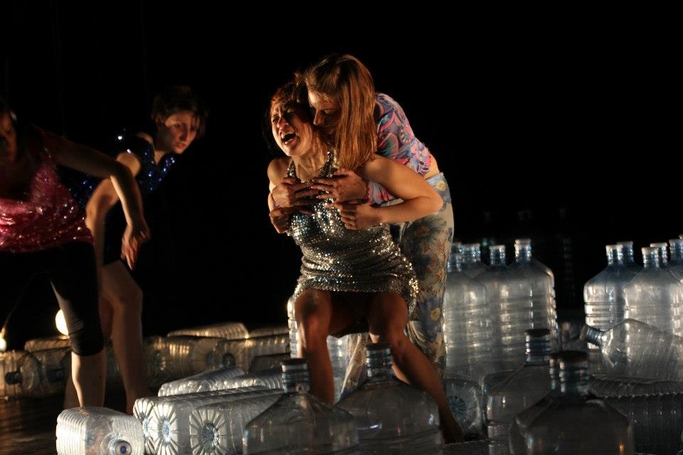
Six girls. Six young actresses selected during a series of seminars in the East- Central Europe carried out by Koreja. Six young women meet in one of the crossroads of the present. Those nonexistent places that we use to attend without seeing. Ola, Anna Chiara, Simona, Irina, Alessandra, Rosaria. Three of them are Italian, one is Polish, one is Bulgarian, one is Macedonian.
Do they have common memories? Which stories can they tell and tell each other? And, most of all, do they have a common story to tell?
Images, dances, musics, stories that blind impossible, mobile and fluid identities. Unpredictable sparks of sense. Everyone of them has outstanding accounts with their fathers. Sorry daddy...sorry... I just wanted to know how much time i have... how much time i have to live...and how?
"I interviewed the six girls and I put their long recordings on tape. More than interviews, they are psychoanalytic sessions. I asked them to tell me when they were really afraid and when they felt safe in their life. The fear is the dominant feeling nowadays. Because we own so much. Mostly material things. So we are afraid that the others, the rest of the world, to whom we have stolen what we have, will submit us the bill. We are afraid to loose all.
I asked the six girls to tell stories, I didn't ask for opinions.
Thus different stories came out: if one has lived for six, seven years under the Communism, she has different fears and desires than the one who descends from Alexander of Macedon". Gabriele Vacis
|
Irina Andreeva (Bulgaria) Alessandra Crocco (Italia) Aleksandra Gronowska (Polonia) Annachiara Ingrosso (Italia) Maria Rosaria Ponzetta (Italia) Simona Spirovska (Macedonia) |
"A dynamic performance, six actress of high scenic impact, a poetic drama but of rather impetuous and sharp style, a harsh drama writing that revolves around the current dynamics of women at quest of their own distinctiveness. The individuality they are seeking can be successful only through a breakaway, through the negation of the identity of the father and the homeland (in Italian “padre” and “patria” share the same semantic root)". Renzia d’Inca – Rumor(s)cena
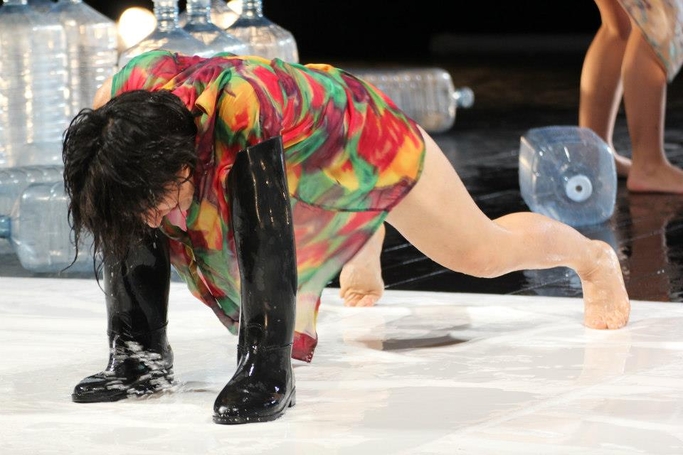
"The performance alternates powerful moments together with falls of tension. Among moving bodies, multilingual storytelling with simultaneous translation, lyric instants, screaming voices leaving the place to strong aphasias, the young girls’ tales bring us in a maze of broken promises, with a striking need to be seen by their own fathers, among family fights, raped mothers, images of endured lives ( and famine) during communism. The mute actions talk about pain, distress, about falls and courage. There is place also for thoughts about time and in-durability. At the end, true tears run down on the face of one actress while the audience applaud attentive and embarrassed frightened of hurting them even more". Paola Carmignani – Giornale di Brescia
"A very sophisticated linguistic operation but at the same time very effective from a theatrical point of view. It melts together Italian, English, Slavic languages subtitles and captions projected on a screen in a game of interactions and reflections that turns the six characters into an unique voice.
The word “padre” (father) evokes memories of violence and abuse, freedom denial and lack of love. It generates pain for an inner emptiness where tears and rage come from.
The show proceeds between political considerations and psychoanalytic sessions. Intense and compelling the female interpreters action". Francesco de Leonardis – Bresciaoggi