Conferences
Carmen Mușat: The matter out of which life is made. About waiting.
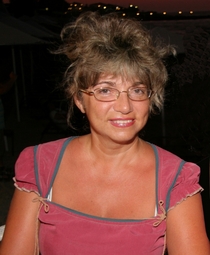
On Sunday, October 9th, starting with 11 a.m., at The Black Box from NTB there will be held the conference entitled: The matter out of which life is made. About waiting by Carmen Muşat. Tickets can be found at the price of 23 lei or 10 lei.
About Carmen Muşat
Carmen Muşat is an essayist, literary critic and associate Professor at the Literary Theory Department from the University of Bucharest. In 2000 she got her PhD in Letters at the University of Bucharest. In 2000 she becomes the editor in chief of the cultural magazine Observator cultural. She is a member of the Romanian Association of General and Comparative Literature and of the Romanian PEN Club. She is a founding member of the Center of Excellence for the Study of Image (CESI), of the Center of Excellence for the Study of Cultural Identity and of the Center for Interdisciplinary studies „Tudor Vianu".
Published books: The interwar Romanian novel (Romanul românesc interbelic, Humanitas, 1998; second edition, Humanitas Educaţional, 2004); Perspectives on the postmodern Romanian novel and other theoretical fictions (Perspective asupra romanului românesc postmodern şi alte ficţiuni teoretice, Paralela 45, 1998); Strategies of subversion (Strategiile subversiunii). Description and narration in the postmodern Romanian prose (Paralela 45, 2002; Cartea Românească Publishing house, 2008), The Canon and Tarot (Canonul şi tarotul, Curtea Veche Publishing house, 2006). In 2009 she published the anthology Beyond literature (Dincolo de literatură), at Hasefer Publishing house, commented by Lucian Raicu. She wrote the foreword for some volumes by Gabriela Adameşteanu, Mircea Cărtărescu, Gheorghe Crăciun, Péter Nádas, Ioana Em. Petrescu and Liviu Ornea. Articles and studies published in magazines: Observator cultural, Lettre Internationale, Revista 22, Euphorion, Euresis. Cahiers roumains d'etudes littéraires, Élet És Irodalom (Ungaria), Romania Culturale Oggi (Italia).
About the conference
"This waiting would probably be the most appropriate equivalent for ‘existence'. The waiting is not just a temporary stage of our existence, it is the essence itself of our human condition, it is not an accident but the substance itself of our life. From the moment we are born till the end of our lives, we are always waiting something or someone: starting with common situations - like that of waiting to have our coffee brought in a bar - and ending with key moments like the confirmation of a diagnostic or the result of an exam, we are waiting for an event to happen. Because it connects the anteriority to the posteriority, the waiting can be perceived only in time; it is determined by and included in time. Because of that the waiting sets the narration, its structure is essentially narrative and the suspense is an implicit element of the waiting.
Comprising in itself the temporality, the presence and the absence, the waiting establishes a relationship with The Other, but also with different faces of the same person, during a period of time. The existential void that we sometimes feel deeper generates a tensioned state of waiting. We are always waiting for something to happen to fill in the void, to fulfil a dream; you are waiting for someone that is still missing, whose presence reveals vulnerability, weakness, loneliness. The human being is becoming and the waiting is the realizing of this becoming. The child is waiting to become mature - "When I grow up..." - the girl is waiting to become a woman, the insecure adolescent is waiting to become a man, the sick is waiting to be healthy (waiting as a form of hope), the death sentenced man is waiting the annulment of his verdict or its execution - among so many types of waiting the distance is between hope and despair (or resignation). Everything is measured by the accelerated or extremely slow rhythm of the waiting
The universal literature is full of characters for whom the waiting is a defining attitude. From Penelopa to Emma Bovary, from Ivan Ilici to Vladimir and Estragon, from Giovanni Drogo to the inhabitants of the fort strictly ruled by Joll, who is waiting for the outside barbarians, without realizing that these are only inside them, the figures and shapes of waiting are as numerous as they are different." Carmen Muşat
Translated by: Oana Marina Silişte
MA Student, MTTLC, University of Bucharest