Remember
Centenary of Horea Popescu, a prominent figure on the Romanian stage
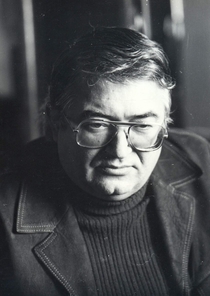
It has been 100 years since the birth of a prolific theater and film director, artistic director of the National Theater in Bucharest for over two decades, Horea Popescu (January 25, 1926 - January 24, 2010).
He was born on January 25, 1926, in the town of Zlatna, Alba County.
He studied at the Andrei Saguna High School and obtained a degree in Law and a diploma in directing from the Institute of Theater and Cinematographic Art. He worked at the C.F.R. Giulesti Theater and the "I.L. Caragiale" National Theater, where he was artistic director for 22 years. He has directed approximately 70 plays and 5 feature films, being recognized for his adaptations of famous authors. An emeritus artist, distinguished with numerous awards, he was decorated with the Medal of Labor and the National Order of Faithful Service. In 2003, he was awarded the Lifetime Achievement Award by UNITER. The Cultural Center in Zlatna has been named after him since 2021.
Throughout a career spanning six decades, with approximately one hundred productions staged, including the set design for some of them, Horea Popescu, a director with a vast culture and refined artistic taste, has established himself as one of the architects of monumental theater. Critic Valentin Silvestru remarked about his shows: They have an unmistakable style, embodied in what I would call "simple monumentality."
He was also considered one of the most innovative directors of his time.
In 1968, he was appointed artistic director of the National Theater in Bucharest, at the request of general director Zaharia Stancu. He remained artistic director for over 22 years. After 1990, he continued his work as director of performing arts institutions in the Ministry of Culture.
Among his numerous artistic achievements, we will mention a few notable productions: Death of an Artist by Horia Lovinescu, Danton by Camil Petrescu, the only stage adaptation of the monumental play, Caligula by Albert Camus, The Foundation by Antonio Buerro Vallejo, One Flew Over the Cuckoo's Nest by Dale Wasserman, The Bathhouse and The Bedbug by V. Mayakovsky, Richard III by W. Shakespeare, Miss Nastasia by G. M. Zamfirescu, Becket by Jean Anouilh, Titanic Waltz by Tudor Musatescu, Coana Chirita by Tudor Musatescu after Vasile Alecsandri, The Cat on New Year's Eve by D. R. Popescu, The Legacy by Titus Popovici, Avram Iancu by Lucian Blaga, Ondine by Jean Giraudoux, etc.
Also at the National Theater in Bucharest, after the revolution, he staged Sheridan's "The Rivals," Dušan Kovačević's "The Professional," directed and designed, which won an award at the Festival of Original Serbian Plays in Novi Sad in 1996, Arthur Miller's Death of a Salesman, directed, designed, and adapted in 2000, and Dušan Kovačević's The Other Land in 2002 (the last production at the National Theater of Bucharest).
In his performances, staged mainly at the National Theater in Bucharest, but also on stages across the country and abroad, Horea Popescu always created an atmosphere, developed a universe. Born of an inexhaustible imagination, a keen sense of proportion, and a unique mastery of the stage, his productions have always been inventive, full of verve, color, suggestion, drama, and meaning, and have consistently enjoyed resounding public success.
Horea Popescu was also the author of several successful films, such as Omul de langa tine (The Man Next to You), De trei ori Bucuresti (Three Times Bucharest), Dragoste lunga de o seara (A Night-Long Love), Cuibul de viespi (The Hornet's Nest), and Moartea unui artist (Death of an Artist), which were inspired by theater, the first based on Gaitele by Al. Kiritescu and the other on the play of the same name by Horia Lovinescu.
He also produced television performances such as: Balcescu after Camil Petrescu, Titanic Waltz after Tudor Musatescu, The Professional after Dušan Kovačević, etc.
Horea Popescu, an emblematic figure of Romanian theater, had his own vision of the world of performance and gave this vision structure, life, and dramatic expression. His work cannot be assimilated into a particular genre, but rather into a theatrical universe distinguished by its original style and the powerful unity of its performances.
Translated by Andreea Codrea-Boeriu