NTB Conferences
Order

Caragiale in theatre and everywhere
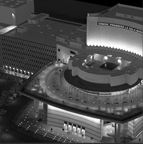
18 December 2022In the month in which the "I.L. Caragiale" National Theatre from Bucharest marks 170 years since its founding, originally known as "The Great Theatre", in the year in which the 170th anniversary of Ion Luca Caragiale's birth and the 110th anniversary of his death were celebrated, on Sunday December 18, 2022, at noon, a conference will be held by the writer, critic and literary historian, professor at the Faculty of Letters of the University of Bucharest, Ion Bogdan Lefter, entitled Caragiale in theatre and everywhere. Now, as always since he wrote his plays and other texts and since they are read and performed by his followers, we have a duty to reinterpret his work and to reflect on his "role" in the "play" in which we all "play", accompanying him in the theatre and everywhere... We invite you to the building where, for almost 50 years, under the hat of Nenea Iancu, on Nicolae Bălcescu Boulevard, number 2, the spectators are attracted by a high class theatre, and the plays of the famous playwright are interpreted by some of the most renowned actors of the Romanian theatre under the most prestigious directorial signatures. We are waiting for you on Sunday morning at the conference, in the foyer on the 1st floor of the "Ion Caramitru" Hall. Admission is free. Translated by Andreea Codrea-Boeriu
A Hand for the Poet 2022
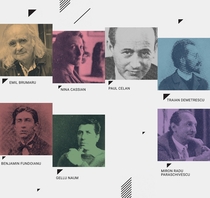
27 September 2022Maia Morgenstern, Medeea Marinescu, Emilia Popescu, Florin Piersic, George Mihăiţă, Alexandru Repan, Marius Manole, Ştefan Bănică, Demeter András, Pavel Bartoş, are the actors who have joined or are returning in 2022 in the project A Hand for the Poet. The new module, a production of The Culture Club Cultural Association, in partnership with Pro Contemporania, with the support of JTI, will be officially launched on September 27, 2022, at 12.00 pm, at the National Theatre from Bucharest, in the presence of some of the most important actors in the cast of the new season A Hand for the Poet is a unique project to promote Romanian classical and modern poetry for local and international audiences and can be accessed online at aplauzepentrupoet.thecultureclub.ro or ahandforthepoet.thecultureclub.ro. Launched in 2021, it consists of a series of video acting recitals that highlight poetic milestones in the Romanian culture. This year, pages dedicated to the poets Miron Radu Paraschivescu, recited by Ștefan Banică, Nina Cassian - poems read by Medeea Marinescu, Benjamin Fondane and Paul Celan, verses interpreted by Maia Morgenstern, Emil Brumaru, in very different versions, signed by Medeea Marinescu and Marius Manole, Gellu Naum, translated by Marius Manole or Traian Demetrescu, revealed by Pavel Bartoș. Among the new releases, a special position is occupied by Florin Piersic's recital, which adds to the existing pages with poems by Coșbuc and Minulescu, but also opens new pages with verses by Adrian Păunescu, Leonida Lari, Costache Ioanid, Dominic Stanca. The lyric poetry of Ion Minulescu, George Topârceanu, Tudor Arghezi, Lucian Blaga, Marin Sorescu or Mihai Eminescu enjoys new interpretative approaches, adding other poems from their volumes. Other novel elements are moments of Romanian poetry translated into French - performed by Emilia Popescu - or into Hungarian - performed by Demeter András. Together with the English versions already available on the portal, they broaden the international scope of the project. The recitals, filmed during 2021 and 2022, are prefaced by a brief written introduction for each poet and illustrated with archival photographs, manuscript excerpts and bilingual commentary on their poetic art. It should be recalled that the actors Ion Caramitru, Mircea Rusu, Emilia Popescu, Andras Istvan Demeter, Mihaela Rădescu, Alex Ștefănescu, Cătălin Frăsinescu, and in a second stage Victor Rebengiuc, Mariana Mihuț, Rodica Mandache, Mihai Mălaimare, Constantin Chiriac, Cristian Șofron participated in the filming in 2021, some of the poems being presented in English, read by Michael Pennington and Anamaria Marinca. The initiative is both an act of restitution and an approach to support a cultural field marginalized in contemporary times, enhancing poetry through the art of acting, speaking, image. A Hand for the Poet will be continued with other big names, aiming to contribute to a better knowledge of the most important classical and modern Romanian poets, in their original form, but also through established translations in English and French, all in a manner accessible to today's audience, for whom the main cultural vehicle is the internet. The project was produced by a team coordinated by Ovidiu Miculescu - general producer and Oltea Șerban-Pârâu - executive producer. The filming of the 2022 session took place within the ArCuB and CreART halls, the productions being signed by Virgil Oprina - director of photography / editing, Attila Vizauer - artistic director. Producer: The Culture Club With the support of: JTI Main partner: Pro Contemporania Cultural partnerships: University of Bucharest, National Museum of Romanian Literature, Romanian Cultural Institute, National Theatre of Bucharest, ArCuB - Cultural Projects Centre of the Municipality of Bucharest, CREART - Centre for Creation, Art and Tradition of the Municipality of Bucharest, University of Bucharest, National Museum of Romanian Literature, Romanian Cultural Institute. Media partners: Radio România Cultural, Radio România Regional, România TV, Liternet, Agentiadecarte, Mediatrust, Webcultura aplauzepentrupoet.thecultureclub.ro ahandforthepoet.thecultureclub.ro 2022 presentation spot https://youtu.be/KuPDQ8OWE5M JTI is among the first multinational companies to invest locally since 1993, being recognized for supporting the most important cultural events in Romania: FITS, TIFF, SoNoRo, Fairytale Tours - classical music in small towns. JTI is also the official sponsor of Gigi Căciuleanu Romania Dance Company. The JTI meetings, which have become a national cultural brand for contemporary dance, reached this year their 23rd edition "giving consistency to our artistic life". In the inclusion efforts of the last period, JTI supports the projects COOLsound.ro - online about the Romanian independent scene and A Hand for the Poet. Special thanks to: Mrs. Gilda Lazăr, Head of Corporate Affairs & Communications, JTI Romania, Moldova & BulgariaProfessor Dr. Liviu Papadima, Prorector of the University of BucharestMr. Ioan Cristescu, Director al Muzeului Naţional al Literaturii RomâneMrs. Mihaela Păun, Director ArCuB – Cultural Projects Centre of the Municipality of BucharestMrs. Claudia Popa, Director CREART – Centre for Creation, Art and Tradition of the Municipality of BucharestMr. Mircea Rusu, acting General Director of the National Theatre Bucharest Translated by Andreea Codrea-Boeriu

Bogdan Aurescu: National interest and the actuality of sovereignty. Romania's foreign policy and the paradigm of the winner
24 January 2022Online video Sunday, April 21, at 11.00, at the NTB's Small Hall, Mr. State Secretary Bogdan Aurescu will hold a conference on National interest and the actuality of sovereignty. Romania's foreign policy and the paradigm of the winner. Ticket price: 16 lei. About the conference Is the concept of national interest still current in a world which is profoundly globalized and acutely interdependent? What is national interest? Is the state sovereignty still necessary and, if so, how does it look like nowadays? What is national interest for Romania in terms of foreign policy? What are the means by which Romania's national interest, from the point of view of foreign policy, can be done better, more efficiently? Can we use the lessons learned so far from major foreign policy files that Romania has done well? Can we talk about - or build - a "paradigm of the winner" in Romania's foreign policy? The conference on National interest and the actuality of sovereignty. Romania's foreign policy and the paradigm of the winner will try to answer, with arguments, these questions. Bogdan Aurescu About Bogdan Aurescu With a career in diplomacy, Bogdan Aurescu works in the Ministry of Foreign Affairs since 1996, starting his work in the Legal and Treaties Division, as a diplomatic relations referent. Between 1998 and 2003 he was successively Minister Counsellor in the Cabinet, Deputy Director of Legal and Treaties, Director of Cabinet, Director of Legal and Treaties / International Law and Treaties, General Director of the General Directorate of Legal Affairs. During 2003-2004 he held in the Foreign Ministry, the office of Secretary of State - Government Agent for the European Court of Human Rights, and between 2004-2005, the office of Secretary of State for European Affairs. Starting in September 2004, Bogdan Aurescu was Romania's Agent for the International Court of Justice, coordinating - throughout the proceedings - the activity of the team representing Romania in the trial with Ukraine at the International Court of Justice, concerning the Maritime Delimitation in the Black Sea, finalized on February 3, 2009. Bogdan Aurescu was appointed Secretary of State for Strategic Affairs in the Foreign Ministry on February 4, 2009. During august 2010 - February 2012 he was the Secretary of State for European Affairs, coordinating also the Security Policy Department. In the period March-June 2012 he was the Secretary of State for Global Affairs. Since June 2012, he is the Secretary of State for Strategic Affairs. He currently has the diplomatic rank of minister-plenipotentiary. He is a member of the Permanent Court of Arbitration from The Hague, substitute member of the European Commission for Democracy through Law (the Venice Commission) of the Council of Europe, substitute representative of Romania in the Danube Commission and Referee appointed by Romania in accordance with Article 2 of Annex VII at the ONU Convention on the Law of the Sea. He is president of the International Law Association's Section of International Law and International Relations of the Romanian Branch of the "International Law Association" (London), editor of the magazine Revista Română de Drept Internaţional and member of the Editorial Board of the magazine Curierul Judiciar. Bogdan Aurescu is, since 2012, an associate professor in the Faculty of Law, at the University of Bucharest (where he taught and teaches Public International Law, Diplomatic and Consular Law, Organizations and International Relations, International Jurisdictions, Law of Treaties and International Law and Practice of Negotiations for the Protection of Minorities). He debuted in teaching in 1998 (assistant professor 2002-2004, lecturer 2004-2012). He taught and still teaches Public International Law and the Law of Treaties and in other academic institutions such as the Diplomatic Academy / Romanian Diplomatic Institute, the National School of Political Studies and Public Administration, respectively, from 2004, the course on International Jurisdictions at the Masters Program of International and European Law at the University "Nicolae Titulescu" from Bucharest. In July 2006 he was visiting professor at the Faculty of Law, from the University of Hamburg, in the ERASMUS Teaching Staff Mobility. Bogdan Aurescu has received the title of Doctor of Laws, specializing in law, with the score "very good" and the distinction "summa cum laude", for the thesis the Concept of Sovereignty and the Supremacy of International Law (2003). He graduated from the National College "St. Sava" (1992), the Faculty of Law (1996, Diploma of Merit) and History (1998) of the University of Bucharest, the Franco-Romanian Institute of Business Law and International Cooperation "Nicolae Titulescu - Henri Capitant" (1996) and the National Defence College from Bucharest (2000). In 2002 he received the MFA's "Certificate of Merit for outstanding contribution to Romania's diplomatic activity." He was awarded the National Order of Faithful Service in the rank of Knight (2002), the Order of Diplomatic Merit in the rank of Knight (2007), the National Order Star of Romania in the rank of Knight (2009), the Commander Cross of the Order of Merit of the Republic of Poland (2009) and the National Order of the Star of Romania in the rank of Officer (2013). He is the author, co-author or coordinator of a total of 13 volumes in international law, 26 chapters and studies published in books and volumes of specialized international conferences and over 80 articles, studies, commentaries, reviews published in Romanian and foreign magazines, such as Revista Română de Drept Internaţional, Analele Universităţii din Bucureşti-Seria Drept, Curierul Judiciar, Annuaire Français de Droit International, The International Journal of Marine and Coastal Law, Helsinki Monitor, Security and Human Rights, European Yearbook of Minority Issues, Revue Hellenique de Droit International, Chinese Journal of International Law. As a substitute member (independent expert) of the Venice Commission, he was a reporter or co-reporter for 20 reports, opinions or studies of this institution. Translated by: Izabella Feher Buy Tickets Online
Paul Cozighian: The Unseen Face of the Romanian Revolution
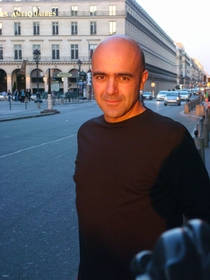
22 December 2021Sunday, December 16, at 11.00, at the NTB's Small Hall, Paul Cozighian will hold a conference about The Unseen Face of the Romanian Revolution (... behind the cameras, the telephones with wires and the closed doors). Ticket price: 16 lei. About the conference With the help of his camera, Paul Cozighian, at that time a student of film directing, was one of the privileged witnesses of the first hours of the Revolution. On the evening of December 21, 1989, he filmed the clashes between the people of Bucharest and the army, which took place near the Intercontinental Hotel. One day later he entered together with the demonstrators in the building of the Central Committee of the Communist Party, where he filmed the events which occurred after Ceaușescu and his wife fled. This was just the beginning, because through the actions taken in the coming days, Paul Cozighian was in the middle of the most important debates (which are still open for discussion) linked to the Romanian Revolution "was it one or was it not .. . ? " About Paul Cozighian Director and freelance journalist, Paul Cozighian was born in 1962 in Romania, but lives since 1990 in Paris, where he earned a master's degree in broadcasting at the Sorbonne. For more than thirty years, working in film, television and radio, he was, one after the other, a TVR correspondent in Paris, then a wartime correspondent in Belgrade for France Télévisions, Radio France and TVR, the author of documentary films and, since 2000, a consultant in communication for large industrial groups from France. Currently, Paul Cozighian is the correspondent in Bucharest for France TV and, since 2009, the founder and promoter of the project 2112. This project commemorates at the end of each year the memory of the martyrs from the Intercontinental Barricade from December 21, 1989, where 49 Romanians lost their lives. Translated by: Izabella Feher
Ion Caramitru: The Limits of Expectation
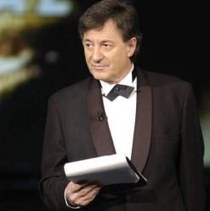
01 December 2021The exposé is based on the conference held in 1992 in the House of Commons in London and was designed to express the respect and gratitude for the families of those who fell in the Revolution and the revolutionaries. The conference retains the structure of the one from the beginning of the last decade, but it is updated, compared to nowadays and emphasizing the idea that nothing has changed since then and until now. "If I look and remember my existence since I opened my eyes to life, more logically, more concretely - I have been in an eternal expectation. I was expecting something that, most of the time, was not being fulfilled, or was being fulfilled with shortcomings, or was leading to a horizon of more and more dramatic expectations. I waited when I was 7 years old - two days for my sister to return from a militia search, I waited two months for my mother to return after she was arrested with my father, and I have waited for two years, for the first time, after he returned from the first confinement. And again, I have been waiting for my life to change, for things to change, obviously, for the world to take on a more significant, more vivid outline, for the sky not to be leaden, but blue… ”. Ion Caramitru Translated by Simona Nichiteanu

The conferences of the National Theatre of Bucharest presented to the Italian audience
27 March 2021Accademia di Romania in Rome, in collaboration with the “Ion Luca Caragiale” National Theatre of Bucharest, presents to the Italian audience the project Conferences of the Bucharest National Theatre. Launched almost eight decades ago by Ion Marin Sadoveanu, the Conferences of the National Theatre returned to the stage of the Black Box Hall starting with 2006 with the lectures of some outstanding personalities of Romanian culture on the most diverse and exciting topics. The conferences selected for this first series will be available, in Romanian and subtitled in Italian, on the Facebook page Accademia di Romania in Rome and on the YouTube channel of the National Theatre of Bucharest: March 27th, 2021: Matei Vişniec - Theatre and journalism. Mutual influences / Teatro e giornalismo. Influenze reciproche April 29th, 2021: Gigi Căciuleanu - L'Om Gigi: Lines_Tracks_Signs_Meanings/ L'Om Gigi: Linee_Percorsi_Segni_Sensi May 29th, 2021: Ioan Aurel Pop - Romanian culture between the Latin West and the Byzantine East / La cultura romena fra l'Occidente latino e l ' Oriente bizantino June 30th, 2021: Andrei Pleşu - About the Heart / Parlare del cuore July 27th, 2021: Bogdan Aurescu - The National Interest and the Topicality of Sovereignty. Romania’s Foreign Policy and the Paradigm of the Winner / L'interesse nazionale e l'auttualità della sovranità. La politica estera della Romania e il paradigma del vincitore. The first conference, Matei Vişniec - Theatre and journalism. Mutual influences/ Teatro e giornalismo. Influenze reciprochewill be presented on March 27th, 2021, on the occasion of the International Theatre Day. In recent years, playwright Matei Vişniec has come to the attention of audiences and creators in the Iberian Peninsula, where the strength of the dramatic text, the timeliness of the topics addressed and the unusual character of his poetic style are highlighted by translations and stagings in many Italian cities. The conference is an exceptional cultural opportunity and an extraordinary chance to learn about the story of journalist Matei Vişniec and the playwright Matei Vişniec and how they coexist and influence each other. Matei Vișniec studied philosophy at the University of Bucharest and became an active member of the Eighties Generation, which left a strong mark on Romanian literature. As he has stated on several occasions, he is a firm believer in cultural resistance and the ability of literature to demolish totalitarianism. Above all, Matei Vișniec believes that theatre and poetry can denounce manipulation through “big ideas” and brainwashing through ideology. Before 1987, Matei Vișniec had made a name for himself in Romania with his clear, lucid and bitter poetry. Since 1977, he has been writing drama; his plays have circulated widely in the literary world, but their staging has been banned. In September 1987, Vișniec left Romania for France, where he was granted political asylum. He began writing in French and collaborating with Radio France Internationale. Today, his plays are staged in more than 20 countries and are a constant presence at major European theatre festivals. In Romania, after the fall of communism, Matei Vișniec became one of the authors with the most staged plays. Accademia di Romania in Rome thanks the "Ion Luca Caragiale" National Theatre of Bucharest for the generous donation of the National Theater's Conference Collection, which is now part of the patrimony of the Romanian Library in Rome. Translated by Simona Nichiteanu

Ilina Gregori: When was the 19th Century? Eminescu and Modernity
15 June 2020Video-streaming On Sunday, June 14th, at 11 o'clock, the Black Box Hall will host the conference When was the 19th Century? Eminescu and Modernity, held by Mrs. Ilina Gregori."What does the good God expect from the one who did not live his life due to the circumstances that humiliated and sacrificed it?"With this question - rhetoric, in fact - Alexandru Dragomir, the exceptional philosopher, but without writings, was recently justifying the tragic balance of his life. Forced by circumstances, he had decided to sabotage through solitude and silence the Romanian culture that was „created” around him – so false and so ill-founded, that any participation in the activities that kept it operative, was in the eyes of the philosopher an unforgivable guilt.But "what does the good God expect" from a brilliant man, who has lived only thirty-nine years, of which the last six cannot even be weighed with the units of measurement suitable for normal human life? In Eminescu's case, then, God should be content with little - if He is "good." And if such kindness and mercy have hitherto manifested themselves neither constantly nor clearly in the judgment of posterity, we must not lose confidence in the mercy of heaven, but only investigate more closely where those expectations we all know stem - maximum or downright immeasurable, if not even absurd - that have always and always imposed themselves in Eminescu's reception. How can we so easily forget the circumstances that distorted his life, the disease that "humiliated" and brutally abbreviated it?If that "God of culture" that C. Noica was talking about is not a simple figure of speech, such an exorbitant expectation could be attributed to him: Eminescu – the genius individual, the "complete man", moral and intellectual role model, "Soul" of the nation, "[its] better conscience". But Cioran also judges from above, from heaven, when it comes to Eminescu. Even in the years of maturity, with all the lucidity acquired in exile, even looking for challenge, offense, blasphemy, Cioran continues to believe that Eminescu saved the Romanian nation, deprived of any political or cultural merits, an "invertebrate" nation, lacking destiny, etc. In his youth, as we know, Cioran had claimed that Providence had expected more from its chosen one: as the Messiah, Eminescu had to project the virtues and triumph of his nation into the near future. However, Eminescu remained a prophet of the past, Cioran claimed, a true failure of the project of Romania’s modern "transfiguration".The disappointment of young Cioran, as well as the imputations of an Eugen Lovinescu, for example – in order not to recall but two moments of a rich critical tradition - they essentially look at Eminescu's deficit in relation to modernity, but can we still accept such an apology for modernity nowadays? How much more legitimacy did this secular religion have in the interwar period? But what did it mean to be modern in the second half of the twentieth century? How was modernity conceived in Iasi? What about in Vienna or Berlin? Which of these contemporary, interconnected and yet asynchronous environments decisively influenced Eminescu's relationship - theoretical, aesthetic, existential-emotional - with modernity? We propose some topics of reflection in this direction, aroused by the Berlin phase of the poet's biography. About Ilina Gregori:Graduate of the University of Bucharest, Faculty of Romanian Language and Literature.She made her debut with literary criticism articles during her student years.Present between 1966-1969 in the literary press, especially in the Luceafărul magazine, with numerous literary reviews, signed as Ilina Grigorovici.She pursued her studies (philosophy, Romanics, comparative literature) in the Federal Republic of Germany, where she settled in the early 1970s.Under the guidance of Professor Walter Biemel, she received her PhD degree in Aachen (completed in 1977), with a thesis on Maurice Merleau-Ponty and phenomenology of language (work published under the title Merleau-Pontys Phänomenologie der Sprache, in 1977, in Heidelberg, Carl Winter Publishing House).From 1976 to 2005, she was a lecturer at the Institute of Romance Philology of the Free University of West Berlin.Since 1977, she has published in synthesis volumes and specialized journals (from Germany, Holland, France) a series of studies, often from communications at congresses, colloquia, international symposia, about Eminescu, Caragiale (Ion Luca and Mateiu), Romanians writers in exile, etc.She translated into German (in collaboration with Heinz Hermann) Mircea Eliade's Memoirs (1987, Frankfurt, Suhrkamp).She collaborated with articles on Romanian literature at the Brockhaus Encyclopedia and the Kindlers Lexicon.The volume Rumänistische Literaturwissenschaft. Fallstudien zum 19. und 20. Jahrhundert (2007, Heidelberg, Winter Publishing House) contains a selection of 20 studies in German and French, dedicated to modern Romanian literature.She returned to Romanian cultural life after 1980 with the volume The Only Essential Literature: The Fantastic Story. Balzac. Villiers de l'Isle-Adam. Pieyre de Mandiargues (1996, DU Style Publishing House).The volumes Literary Studies. Eminescu in Berlin. Mircea Eliade: Three Analyses (2002, Romanian Cultural Foundation Publishing House, "Titu Maiorescu" award of the Romanian Academy) and Do We Know Who Eminescu Was? Facts, Riddles, Hypotheses (2008, Art Publishing House) followed. Translated by Simona Nichiteanu

Sorin Alexandrescu: Visual Culture, Pros and Cons
10 June 2020Video-streaming On Sunday, March 4th, 2007, within the NTBB Conferences programme, Univ. Prof. Sorin Alexandrescu held the conference entitled Visual Culture, Pros and Cons. "We live nowadays in a visual age, in which art or religion, which dominated other periods, have declined in presence, in the sense that it influences much less what happens in the world, and the main interest stems from what is visual." Sorin Alexandrescu About Univ. Prof. Sorin Alexandrescu Professor at the University of Amsterdam, professor at the University of Bucharest and, since 2001, founder and director of the Centre of Excellence in Image Studies (CESI) of the University of Bucharest and the "Ion Mincu" University of Architecture. He first worked as teaching assistant and lecturer at the University of Bucharest in the field of comparative literature and stylistics and published several books, including "William Faulkner". He migrated in 1974 to the Netherlands, where he worked as a professor at one of the largest Romanian language departments in the West, at the University of Amsterdam. Returning, partially, to Romania, since 1989, he taught at several universities in the country and published several books, including "The Romanian Paradox" or "Mircea Eliade, from Portugal". Translated by Simona Nichiteanu

Adina Nanu: Pleading for the Hats
09 June 2020Video-streamig The National Theatre I.L.Caragiale has the pleasure to invite you to discover Adina Nanu’s spectacular collection of costumes and hats in the lobby of the Atelier Hall for two weeks (between 8th – 22nd of February). Adina Nanu is a critic and art historian, the author of the only book about Romania’s costumes history. The exhibition opens on the occasion of the conference held by Adina Nanu at the Atelier Hall from 11:00 a.m. on February 8th. Adina Nanu’s collection comprises some hundreds of costumes which belonged to her family or donor friends, ranging from casual dresses to evening ones, from hats, men’s costumes, accesories, decorative objects or furniture articles from ladies’ boudoir from La Belle Epoque, from the inter-war period to present costumes. Both the conference and the exhibition are a plea for style and beauty and promote the aesthetic refinement, the fashion and ellegance of times gone by. Stressing the importance of hats in ladies’ apparel, Adina Nanu will show that a hat isn’t a simple accesory, but it is also a definite indicator for the bearer’s social, psychological and cultural profile. The conference and the exhibition addresses not only those interested in the costume history, but also art directors, fashion designers and all art lovers. We hope that after attending the conference and the exhibition the NTB audience will cry out:”Chapeau – bas!” About Adina Nanu Critic and art historian. Between 1945-1950 she attended the Institute of Fine Arts in Bucharest and the Faculty of Letters simultaneously. Between 1947-1950 she attended the Medicine School to bone at anatomy. In 1977 she got her Ph. D in History of Arts with a thesis on 19th century costumes in Bucharest. Assigned as an assistant to the National Arts Museum in Bucharest, she worked at the World and Romanian Art Galleries. Since 1950 she has been asked to work at the Arts History Department within the Institute of Fine Arts where she has remained until retirement, first as Assistant, then as Lecturer since 1954 and as Reader since 1968. As her colleagues, Eugen Schileru and Ion Frunzetti, she retired having this degree in 1987, since the Professor degree was awarded by the Ministry of Education only to those politically priviledged during the years before 1989. She taught World Art History classes, special classes of History of Painting, Sculpture and Decorative Arts and the first classes of History and Theory of the Costume in Romania at the Scenography section and then at the Fashion Design section whose foundation she took part in. Consequently, she published the first history of world costumes in Romanian, Art, Style, Costume in 1976. Since 1994 she has been teaching Visual Education and Styles in Costumes and Decoration classes at UNATC Bucharest, for the Staging Department during the first years, then for the newly founded Scenography section, but also for the Choreography section. For the UNATC students she published Arts on humans (2001) and Can you see?Communication through Imaging (2002), she rewrote and augmented Art, Style, Costume ( second edition,2008). Since 1975 she has been an INSEA member - International Society for Education through Art (UNESCO) and after 1990 founder and president of its branch in Romania. She has been a member of the Union of Artists in Romania since its foundation in 1950. She exhibited drawings and sculptures in five UAP collective exhibitions and in a personal exhibition at Galateea Gallery in 2008. Books published (selection): Gh. Tattarescu – The Painter (1955), Albrecht Dürer (1957), Theodor Pallady (1963), About Sculpture in Brief (1966), Octav Angheluţă – The Painter (1967), Sabin Popp – The painter (1968), Antonello da Messina (1969), A. Bourdelle – The Carver (1971), Lucas Cranach the Old (1972), On Dürer’s footsteps (1976), Art, Style, Costume (1976, the English version in 1981), Donatello- The Carver (1980), I. Gr. Popovici – The Carver (1984), Ion Lucian Murnu (in collaboration with Doina Mândru – 1986), Men and Fashion (2009). Awards: The „Loyal Service” Order – commander, Union of Artists (2000), Honour Diploma by the Staging and Production University (2002), Professor Honoris Causa by the National University of Arts (2008). „The collection formed itself as a consequence of my interest and respect for the object made with talent and skillfulness which I found in my house and kept them, I didn’t throw them away, as young people do nowadays. At first I played together with my parents, then with my children, using grandparents’ hats and clothes, then I used them as didactic material for the Arts History and Costume Art classes that I held. Relatives and friends also found in their wardrobes hats and dresses which were out of fashion, tailcoats and tuxedos which were useless, but they were filling the space and they gave them to us. I only bought the manikins and a few disparate pieces, links which were missing in the chain of some demonstrations. Even nowadays, my friends’ friends come to complete the exhibition with precious memories. I only like studying each hat or collarette to discover its origin, style and fashion it belonged to and to find its place in the exhibition so as to match the general geometry of the room, which has to recompose the atmosphere and perfume of every age. Among other things, I placed perfume bottles here and there, ranging from XIX th century pachouli to Coco Chanel’s Chanel no.5 and following. Due to these continuous changes, none of the fifteen exhibitions I have organized so far was similar to the others, starting with the first one from the Collection Museum in 1997, to the following ones from the National Arts Museum, History Museum, from Cotroceni Palace, Peles or the Costumes Museum in Venice”. Translation made by Niculae Cristine MTTLC, University of Bucharest

Mihai Răzvan Ungureanu - Romanian Ethics and Public Sense 200 Years Ago
04 June 2020Video-streaming Mihai Răzvan Ungureanu (b. September 22, 1968, Iași) is a Romanian historian and diplomat, who held the positions of Minister of Foreign Affairs of Romania between 2004-2007 and director of the Romanian Foreign Intelligence Service between 2007-2012. He was Prime Minister of the Romanian Government between February 9th, 2012 and April 2012. In a conference that aspired to be a Sunday story, the historian Mihai Răzvan Ungureanu reviewed the delicious characters that made up the Romanian society two centuries ago, seen through the eyes of foreign travelers, but also of domestic chroniclers. "Morals in this country are completely peculiar, or rather there are no morals. There are only bad habits, there are only prejudices. Among the significant ones, a lot of pride and a lot of turpitude, a lot of fanaticism, even superstition, but also more debauchery, and also more immorality ”. (Vice-Consul of France in Iasi). Translated by Simona Nichiteanu