Spectacles
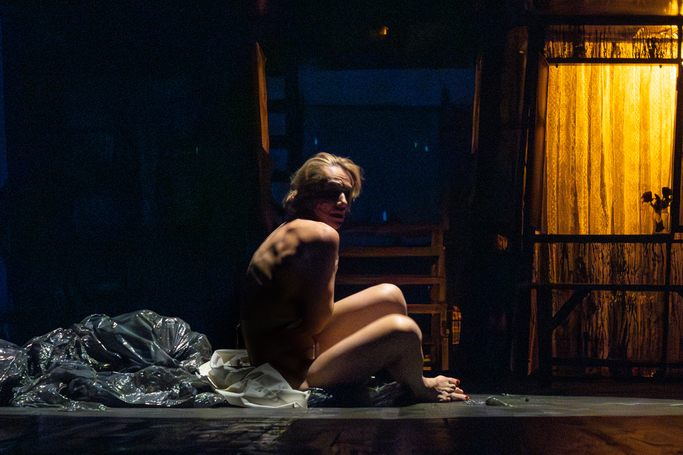
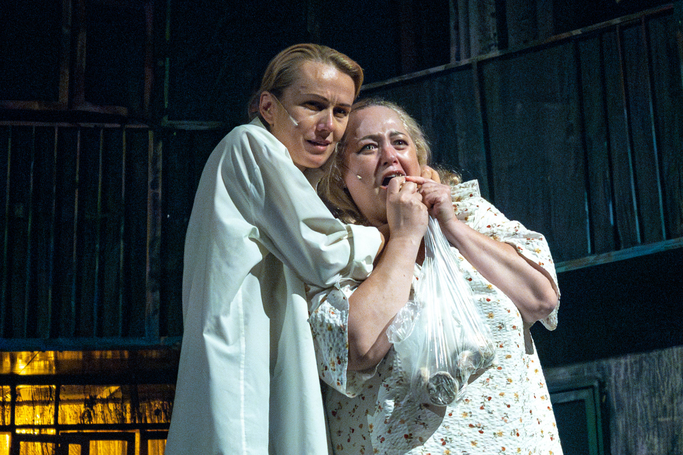
The Glass Garden
After Tatiana Tibuleac
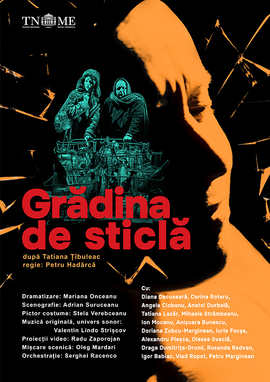
The Glass Garden
After Tatiana Tibuleac
Duration: 2 h 30 min / Pause: No
80 lei
60 lei
30 lei
Production of the "Mihai Eminescu" National Theater Chisinau presented at the Meeting of Romanian National Theaters in Chisinau
Audience age recommendations: 14+
With English translation
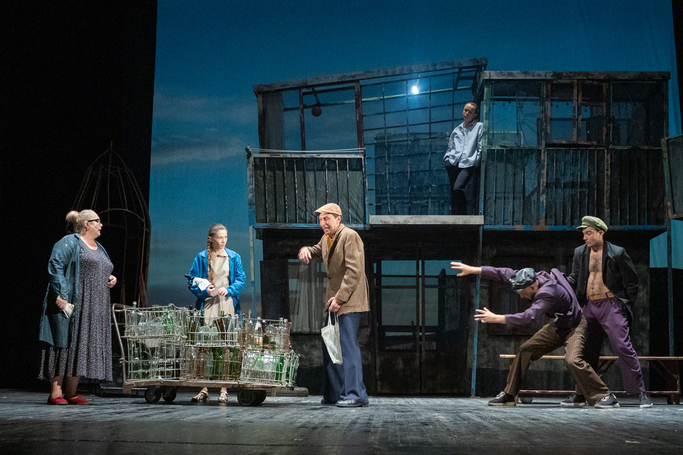
A word from director Petru Hadarca
"The novel The Glass Garden by Tatiana Tibuleac shook me deeply and took me out of my inner comfort. It made me see the world from a different perspective, from several different angles: I felt the bitterness in the mouth of an orphaned child, a woman's fears about her femininity, the emptiness in the soul of a man desperately searching for a sense of identity. This confession, which sometimes bursts with rage and cruelty, sometimes passes into lyrical meditation, sometimes meticulously cuts the thread in four or bites ironically, makes you wonder by what miracle an abandoned and unloved child, raped in her teenage years, becomes a good man who loves and gives love?
Taken from an orphanage, named Lastocika, brought up by a Russian woman in a Russian-dominated Chisinau, where the court was legion, the orphan grows up in search of love, understanding, and landmarks with which she could identify. Her mother tongue, Romanian, keeps her rooted in her cultural-identity and opens the way for her to connect with the free world. I am sure that the destiny of the character Lastocika (Swallow) is about many of us, and I cannot shake off the thought that on a large scale it is about Bessarabia - Moldova - Moldova the Low Country.
The performance does not provide answers, any more than the book does. And we hope that, like the novel, our show will generate empathic connections and provoke reflection."
Tatiana Tibuleac, writer, author of the novel "The Glass Garden", winner of the European Union Prize for Literature – 2019
Tatiana Tibuleac about the show: "I wrote The Glass Garden having in mind the story of a little girl. The actors turned it into the story of a country. This is the extraordinary power of theater and its gift to humanity - to make a world out of a human being."
Tatiana Tibuleac was born in 1978 in Chisinau, Republic of Moldova. She was educated at the "Iulia Hasdeu" High School and at the Faculty of Journalism and Communication Sciences of the USM. Her first novel "The summer when my mother's eyes were green", Cartier Publishing House, 2017, was awarded the Writers' Union of the Republic of Moldova Prize (2017), the Prize of the Romanian Observator Cultural magazine and the Observator Lyceum Prize (2018)
The novel "The Glass Garden" was published by Cartier Publishing House in 2018 and has been translated into French, Spanish, Bulgarian, Slovenian, Polish, Greek, Croatian and Albanian.
Reviews:
"A teamwork on the scale of a symphony orchestra stands behind a collective character that brings to life this multicolored human landscape and background, full of strength and fragility, of unquenched thirst and unquenched energy for love and happiness. The memory of trauma, passed down from generation to generation, the search for identity and the rediscovery of the self through confessive, liberating, meditative or accusatory verbalization, nevertheless left me with the impression of a healing coming to terms with and (mature) overcoming by the protagonist in her relationship with her past and childhood, marking the beginning of the reconstruction of a new life." (A World of Broken Destinies, Chronicle by Ivan Pilchin)
"In the end, "The Glass Garden" is a story of survival, of female dedublation in a post-Soviet world, where women represent a collective feminism, inarticulate but powerful. They are the unspoken heroines of that period, bearers of deep wounds and hidden strengths, and the performance renders them with an elegance that defies tragedy. The theatrical production is not just an artistic act, but a dialog between past and present, a reminder of what has shaped us and how we continue to define our identity. The impression left by the acting, the deep story and the visual and aural details is one that will linger long after the curtain falls.
So, "The Glass Garden" serves as a metaphor for the fragility of our identity, reflecting both the beauty and the vulnerability of human experiences. This 'garden' symbolizes a space in which memories and traumas coexist, and glass emphasizes transparency and distance." (A performance about the deduplication of the self and the search for identity, Review by Mariana Marin)
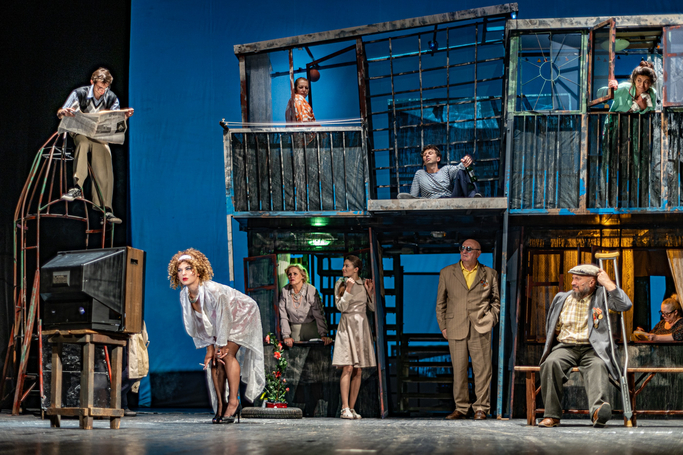
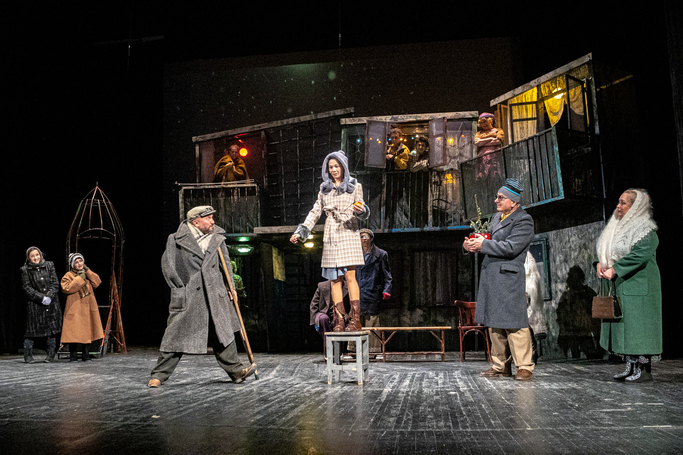
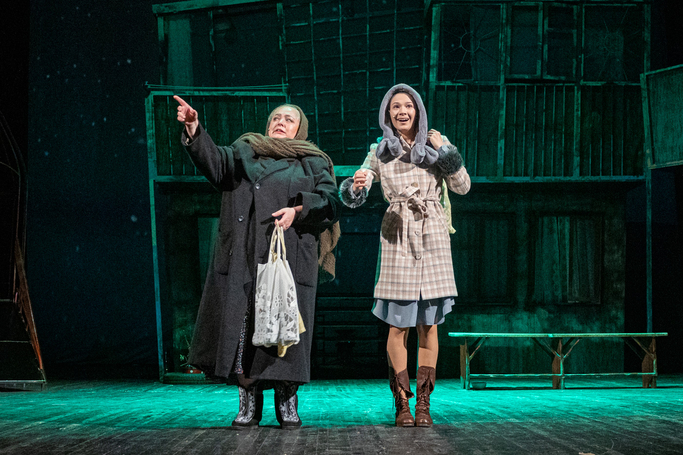
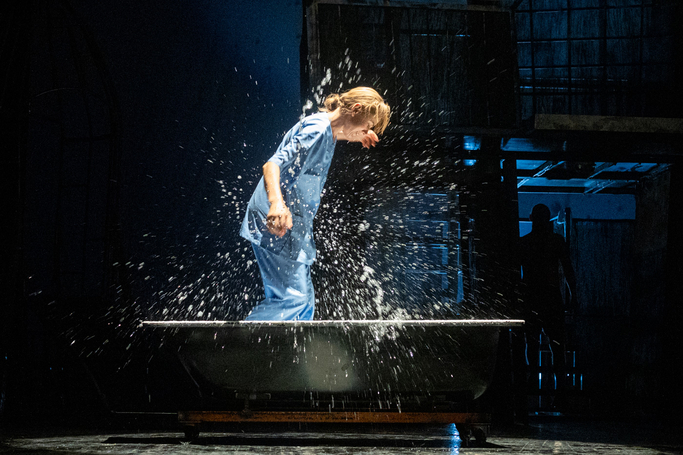
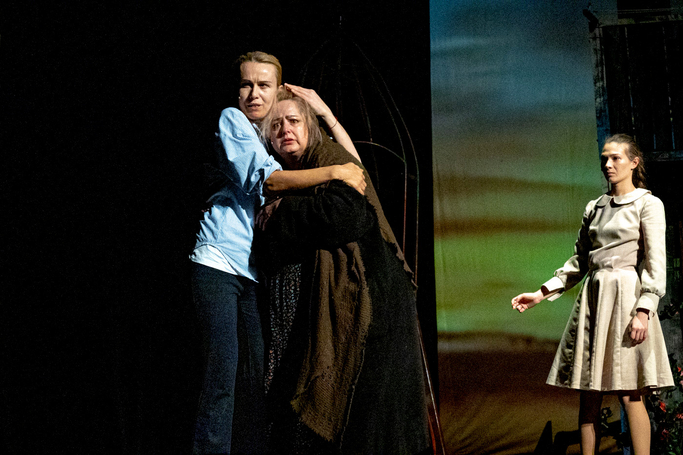
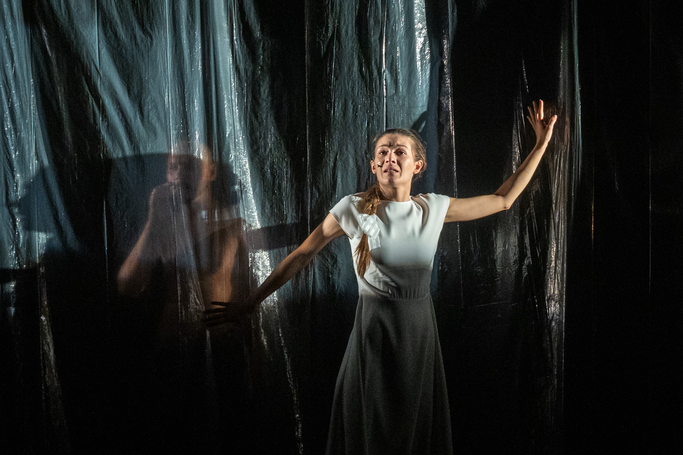
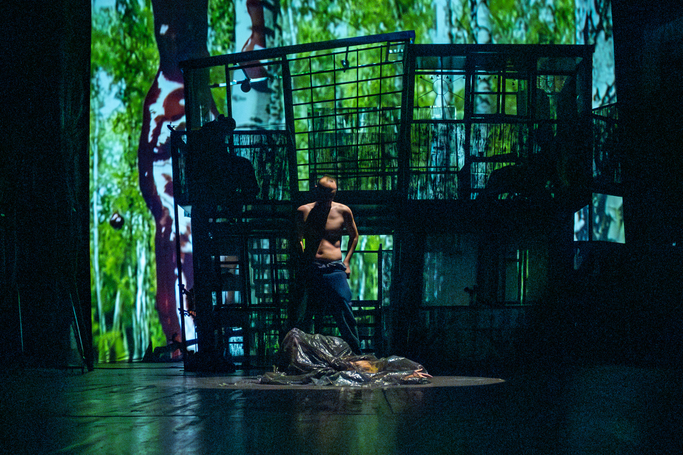
"A direction made by Petru Hadarca with much talent and method. We have to admit that it's a brave thing to make a performance based on this novel. It's overwhelmingly complex, but to bring to the forefront what is hurting us and preoccupying us right now. It's the work of the surgeon who cuts on the spot, always running the risk of malpractice and the risk of missing the operation. Petru Hadarca succeeds. The surgical therapeutic action he undertakes is applied, carried out with dedication and vision. And the patient gets up and walks... At a certain point you get the feeling that it's not a performance, but a living painting. There is a chromatic, musical staticity of characters repeating themselves, but suddenly accelerating like a kaleidoscope, like a multicolored glass mosaic that can explode and explode. The directorial concept is the work of the omniscient and omnipresent creator, withdrawn but like a deus ex machina and draped by the acting, so that you get the impression that everything is happening now and here, that it's a docudrama, pretending to dramatize a novel. There's a degree of frustrated veracity manifest there." (Orphans at the orphanage of history, Review by Maria Pilchin, Moldova magazine, September-October, 2024)
Translated by Andreea Codrea-Boeriu
| Lastocika : | Diana Decuseară-Onică | Lastocika child, Tamara : | Corina Rotaru |
| Tamara Pavlovna : | Angela Ciobanu | Zahar Antonovici : | Anatol Durbală |
| Șurocika : | Mihaela Strâmbeanu | Bella Isaakovna : | Anișoara Bunescu |
| Katiușa, Assistance 1 : | Olesea Sveclă | Raia, Varea : | Tatiana Lazăr |
| Tonea, Assistance 2 : | Doriana Zubcu-Marginean | Colonel: | Ion Mocanu |
| Rodion Eduardovici, Chira, Drunk 1: | Iurie Focșa | Lioncik : | Alexandru Pleșca |
| Maricica, Greta : | Rusanda Radvan | Pavlik: | Petru Marginean |
| Oxanka: | Draga-Dumitrița Drumi | Dmitri, Drunk 2: | Vlad Ropot |
| Radu: | Igor Babiac |