Conferences
Andrei Marga: The Destiny of Europe
Sunday January 29th, at 11:00, at the National Theatre's Black Box, the conference on the theme Europe's Destiny will be held by Andrei Marga. Ticket prices: 23 and 10 lei.
About the conference
The conference resumes the question about the destiny of Europe and its rationalities. The distance is taken from Spengler and Keyserling. Nowadays, the destiny is being split in a batch of alternatives - arguments Andrei Marga. The conference clears up, as a premise for their establishment, the European identity (proposing the ‘generative concept'), ‘the sources' (Europe's major ‘inheritances'), it evokes Europe's present difficulties and the current diagnostics (‘the postmodern society', ‘the society of void', ‘the civic society', ‘the society of risk', ‘the society of communication', ‘the society of knowledge', ‘the invisible society', ‘the post secular society', ‘the infantile society', ‘the society of indifference', ‘the uncertain society'). Andrei Marga explains Europe's destiny as a result of the intermingling of alternatives in 5 crucial points: the reassuming of democracy not only as an election technique, but also as a ‘life style', the reconstruction of the social state, the reassuming of Europe's characteristic values, understanding of sciences in the context of genesis and application and theming of senses. Europe's destiny depends on a cultural anamnesis and intellectual innovations, fit for a profoundly changed world.
About Andrei Marga
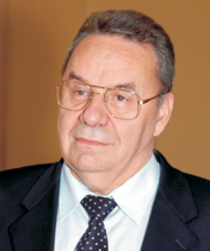
Rector of the Babeş-Bolyai University (1993-2004, 2008-2012), he was the Romanian Minister of National Education, member in academies and managing boards from several international organizations, Andrei Marga is one of the most outstanding personalities in the Romanian field of philosophy.
Andrei Marga published numerous philosophy volumes (Rationality, Communication, Argumentation, 1991; Introduction in the Philosophical Methodology and Argumentation, 1992; Introduction in the Contemporary Philosophy, 2002; The Philosophy of European Unification, 2003; Religion in the Globalization Era, 2003; Die kulturelle Wende. Philosophische Konsequenzen der Transformation, 2004; Habermas' Philosophy, 2006; Relativism and Its Consequences, 2007; Philosophia et Theologia Hodie, 2008; The Big Brothers. Meetings with Judaism, 2009; The Absolute in the Present Day. Joseph Ratzinger's Theology and Philosophy, 2010; Argumentation, 2010; Riflessioni italiane, 2011; The Destiny of Europe, 2011). The writings are well known in the country and abroad.
He was distinguished with Ordine della Stella della Solidarietà Italiana (Italy, 2009), Medaglia Pontificia. Anno I. BenedictusXVI (Vatican, 2006), Medaglia Pontificia. Anno XXVI. Joannes Paulus II (Vatican, 2005), Das Grosse Verdienstkreuz (Germany, 2003), Gra-Cruz da Ordem National do Merito (Portugal, 2000), Ordinul Naţional Pentru Merit, the rank Mare Cruce (Romania, 2000), Grand Officier de l'Ordre National du Mérit (France, 1999), as well as with prizes, honorific titles and medals in Slovenia, Hungary, Israel, U.S.A., France, Moldavia, Germany, Azerbaijan. He was awarded the Prize of the Sara and Haim Ianculovici Foundation (Israel, 2008), the Herder Prize (Germany - Austria, 2005) and other international prizes.
Translated by: Izabella Feher
MTTLC, Bucharest University