Conferences
Brîndușa Armanca: What has become of television in the Internet Age
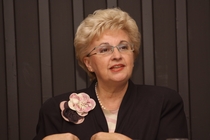
Brîndușa Armanca will be holding the conference What has become of television in the Internet Age onSunday, April, 27th, 11 a.m., in the Small Hall of the National Theatre.
Ticket cost: 16 lei.
About the conference
A survey recently conducted by the IRES has corroborated Eurostat's previously released figures: Television feeds information to over 80 % of Romanians. What makes them sit in front of TV, which at present preserves its upper hand in the Internet age? First of all, it is both reachable everywhere and user-friendly: one can find television in every house and it is the easiest thing, short of special technical knowledge or skills, to press a button and zapping through your favourite programmes to choose one. Furthermore, watching TV is an idle process which does not require interaction with other people and the televised illusion makes up for the everyday weariness.
The most important thing, though, about television boils down to the delight people take in watching TV which comes with a wide range of entertainment shows and visual information that is much more sophisticated than that of virtual media.
The entertainment which video games afford, though not to downplay its importance, has not yet been able to dwarf the big TV shows watched by millions of viewers.
Has the Internet not yet gained the upper hand over the classical media of entertainment? There is no straight answer to the question. Journalism, in printing format, is on its last legs; however, online journalism lives on. Television has also been transferred to other interfaces and means of communication, furthermore, interactivity has shifted the viewer's stance from the idle way in front of the TV to the viewer who has become more involved, especially if one is part and parcel of the “Y generation”, interacts on Facebook, Twitter or becomes he himself a “producer” on YouTube. New developments in technology have brought to life outstanding shifts in communication and “the small screen” becomes smaller and smaller in the digital Age: laptop, tablet, smartphone. Besides the latest developments in technology, there are issues that have to be addressed, namely, journalism boundaries, substantiation and ethics. A profession that has undergone radical shifts. Internet surfers have radically changed as well. Whoever delays, even for a second, to deliver the news loses 18 % of the audience. We are talking here about internet traffic and the number of visitors, but the television struggle for public audience is now more than ever effective and at times, merciless.
The conference will start the debate from these talking points to shape an era of sweeping media shifts, which have a bearing on journalism, on the type of audience and the way information has been brought home to the viewer by the media and most likely, on the ethics and philosophical fabric of society. If there is competition or overlapping between television and Internet it will be shown in the video slides, photos or statistics which have been lumped together for a more cogent substantiation.
About Brîndușa Armanca
Brîndușa Armanca is a journalist and a university professor. Brîndușa was a member of the esteemed editorial staff of Radio Europa Liberă, Expres or Ziua and headed for many years the television studio branch of TVR in Timișoara. Between 2006 and 2012, Brîndușa Armanca was the director of the Romanian Cultural Institute in Budapest. Currently, Brîndușa works as the editor-in-chief of TVR Timișoara and has a weekly column of press criticism “Media culpa” in the magazine “22”. Member of the Writers Association in Romania and of numerous other media organisations such as International Communication Association or ECREA, Brîndușa is also the author of numerous books on journalism such as “Televiziunea regională în România” (2002), “Media culpa” (2006), “Învață să învingi” (2006) and “Istoria recentă în mass-media. Frontieriștii” (2009), translated in hungarian in 2011. Also, books on communication such as “Ghid de comunicare pentru jurnaliști și purtători de cuvânt” (2002), or on literary history such as “Mesajul lui Crypto. Comunicare, cod, metaforă magică în poezia românească modernă” (2005). Brîndușa's TV movies have been awarded both at domestic festivals and international contests and Brînsușa's activity has been rewarded with the Romanian Academy Cultural Distinction, as well as with the Hungarian Ministry of Culture Distinction for cultural diplomacy.
Translated by: Coșoianu Mircea
MTTLC, University of Bucharest