NTB Conferences
Order

Prof. Dr. Dinu Antonescu: The Impact of Communism on Romanian Medicine
03 June 2020Video--streaming On Sunday, January 19th, 2020, from 11:00 am, at the NTB Small Hall, Prof. Dr. Dinu Antonescu will hold the conference The Impact of Communism on Romanian Medicine. About the conference In order to assess the impact of communism on Romanian medicine, an analysis of the medical situation from the years leading up to the Second World War is made initially. It is shown that in 80 years, from 1859 to 1940, Romanian medicine experienced an impetuous development, which placed it in the context of European medicine. This meant not only that its teachers and some of the doctors were fully or at least specialized in prestigious European centres, that the healthcare and university were similar to the West, but that its performances were at European level, that they were appreciated abroad and that there was a permanent connection, a fruitful exchange of ideas between Romanian and Western medicine. Communism has brought in medicine, as in all other aspects of social life, a complete reversal of values! Only one ideology, the Marxist one, was allowed and any other view on social, historical, political phenomena was forbidden. All medical disciplines were ideologized, especially those that were prone to interpretations, such as biology for example, introducing pseudo-scientific notions and theories. It was almost obligatory for any Western scientist to be placed after a Russian name, as was the aggrandizement of Soviet medical science obligatory. The selection was replaced on the basis of the value with the political criterion and of the social origin, reaching in the medical management positions persons imposed by the communist forums, without the proper training and without moral and professional authority. Lies, dementia, blackmail, terror were used to intimidate and force teachers and physicians to join the communist doctrine and to annihilate their personality and remove those who did not accept the compromise. A complete isolation was imposed behind the "iron curtain", contacts with the Western medical world being allowed only to the communist elites. The gap between Romanian and Western medicine has progressively increased throughout the communist period. Numerous examples are given. Communism destroyed Romanian medicine and the consequences are felt to the present day! Prof. Dr. Dinu Antonescu About Dinu Antonescu Primary physician, orthopaedics - traumatology Born in 1935, in Ploieşti. Graduated from the Medical Faculty of the "Iuliu Haţieganu" University of Medicine and Pharmacy of Cluj (1952 - 1958), as valedictorian. Activity: Medical assistance: primary doctor since 1971 (Brâncoveanu Clinical Hospital for Orthopaedics); head of the Orthopaedic section at Foisor Hospital 1991 - 2001; Education: UMF Carol Davila: Teacher 1992 - 2001; consulting professor since 2001. Research: PhD in medical sciences 1970; Main scientific researcher first degree since 2001. Publications: first author in the volumes: Semiology of the locomotor system in the Medical Semiology monograph, edited by I. Bruckner, Medical Publishing House, 2002; Fractures generalities in the Treatise of Surgical Pathology, edited by N. Anghelescu, Medical Publishing House, 2001; Tumors of the Locomotor System, and Surgical Treatment of Inflammatory Rheumatism in the Treatise of Internal Medicine, Rheumatology under the editors R. Paun, Medical Publishing House 1999; News in Orthopaedics and Traumatology in Surgical News, edited by E. Constantinescu, Medical Publishing House 1989; Elements of Osteo-Articular Pathology, Teora Publishing House 2000; Diseases of the Foot in Dečja Ortopedija edited by Zoran Vukašinović, Belgrad 1999; Correction of SpineDeviations, Medical Publishing House, the collection Medicine for all, 1993; Calculation Methods and Experimental Techniques for Stress Analysis in Biomechanics, TechnicalPublishing House, 1986; Orthopaedic and Traumatology Elements for Students, Publisar Publishing House 1999. Distinctions: The "Romanian Star" National Order to the rank of High Officer 2000, the Order "The Crown of Romania to the rank of Officer", 2014. Translated by Simona Nichiteanu

Octavian Paler: With Melancholy, about the Barbarians
27 May 2020Video-streaming On Sunday, October 26th, 2009, Octavian Paler held at NTB the conference entitled With Melancholy, about the Barbarians. About Octavian Paler Octavian Paler (1926-2007), Romanian writer and publicist. "I’m afraid I am a monologue man. I am afraid that I was born barricaded in myself and that I did not manage, during my existence, to get out of this intimate prison, apart, to communicate with the world ", said Octavian Paler, in the show" Professionals ", made by Eugenia Vodă on TVR 1. His books and public appearances may have contradicted him. Octavian Paler always knew how to leave strong phrases behind, like crumbs for those who believed in reason. "I am a misanthrope. That's right, a defensive misanthrope, not an offensive one. I lack faith in man. Divinity seems to me necessary as existence. Because if God does not exist, many things are inexplicable in this world. Probably for the comfort of our reason we need to believe in God ", Octavian Paler added. He has published many books. These include "Shadow of Words," "Life on a Platform," "Galileo’s Defense," "Subjective Mythologies," "Self-Portrait in a Broken Mirror," "Cordial Polemics," and more. In the book "Octavian Paler - Conversations with Daniel Cristea-Enache" (Polirom Publishing House), the essayist answered many questions, outlining a self-portrait that remained as a landmark of integrity. Here is what Octavian Paler replied to the literary critic Daniel Cristea Enache: "You ask me if I recognize myself in the 'figure and behavior of the knight of La Mancha.' The first impulse would be to say "Yes." And I would have an argument. To get out of the crying tone of my last books, not to gloss over old age and my illnesses, I started working on a book (it's about "Mythological Slander") where I rely on an inclination of mine, (a bit masochistic, maybe) to discredit myself, on the border between "game" and those "truths" that are too serious to be told on a serious tone: I hold (I told you, I have the impression) "conferences" of moths who make their ballet numbers through my room whenever they get bored of hiding. Sounds like fighting windmills, right? Even if I miss a squire. " "What drew me to Don Quixote on first reading? Since I want to respect the bet of sincerity, I will not tell you anything about possible "aesthetic emotions". What I know for sure is something else. I was undergoing a crisis then: I was trying to overcome my complexes, shyness and introverted inhibitions, doing great. I was trying to hide the night from me (I suspect that all introverts have an inner night, through which they grope and hide from others, because they do not know what it hides) through childish bravado. Remember, I broke glasses at the student balls! And that I was a virtuoso in the "art" of throwing a knife, like the Indians, at a distant target, thrusting it into something: a tree or a board! "" Doesn't my ridiculous zeal prove that I still have certain affinities with Don Quixote? I had the horror of ridicule in public, but in intimacy I did not hesitate to embark on funny dreams. Since I have been meditating, I assure you, with much application to the idea of retracing Don Quixote's path! I'm almost moved by the thought that I could take myself seriously. I was just careful not to expose myself to anyone. ” Between 1949 and 1961, he was an editor of cultural programmes at the Romanian Broadcasting. In 1964, he was Agerpres' correspondent in Rome for three months. After the events of December '89, he founded together with Ana Blandiana, Gabriel Liiceanu and others The Social Dialogue Group, which stands out through its anti-communist positions. He became honorary director and editorialist of the newspaper România liberă, then editorialist at Cotidianul and Ziua. He remains an acclaimed journalist and commentator. Participates in talk shows, on topics of politics, morality, etc., on various television stations. In the last years of his life, he became a fierce critic of the Romanian political class. He made a television movie dedicated to his native village, Lisa. He passed away at the age of 80, following a cardio-respiratory arrest. He was buried, with military honors, in the Holy Friday Cemetery. Quotes Octavian Paler * Hindu sages claim that there are four seasons in life. One to study and discover the world. The second to establish a home. The third to reflect. And finally, the fourth, in which, freed from inhibitions and obsessions, you become a kind of traveler without luggage. * We today are a country of lonely people. So lonely that even the unhappy are not in solidarity with each other. * What we do not live in time, we never live again. * Do not despise small things. A candle can do at any time what the sun can never do: shine in the dark. * Whoever rose up against silence always risked silence around him. People forgive you a lot, but they do not forgive you when you point the finger at cowardice. They want to look noble even when they do nothing about it or especially when they do nothing. * I learned that it takes years to gain confidence and that in just a few seconds you can lose it. * There is no happiness to remember without sadness. * You never had enough imagination to imagine the world without you. Even if you did not go with the vanity to the paranoia of believing that the world revolves around you, that it is eager to hear what you say, you lacked the intelligence or the power to accept that you meant nothing more than the yellowed photos that someone, after you, will throw in the trash. * A mediocre life can be justified. Especially in a mediocre world. But the mediocrity of illusions has no excuse. Nothing stops us from dreaming without measure. * The goals we have set ourselves are essential. No one could stop Don Quixote from storming the windmills. Neither the laughter nor the realism of the others. I do not know a clearer example that you can be a loser without being a mediocre one, that a life can be fulfilled not only by a success, but also by a failure. * I think love lifts us into our own eyes. And how much you want to be the way the other person sees you! You would like, and even try, to close the gap between what you know you really are and what you intuit the person you love sees in you. * I think I could list a few hundred smells of grass, depending on the time of day, rain, sun, season, earth, shade, height, humidity or dryness. I could distinguish now, I suspect, with my eyes closed, the wild blackberries from the blackberries grown in the bushes, the rustle of a beech from the rustle of a fir tree. Instead, many of the lived ones faded, leaving gaps behind, like in a half-burned forest. This discovery forces me to admit that my memory now resembles a broken mirror, which restores fragments of my life. * To die means to move to a star. Octavian Paler - Self-Portrait in a Broken Mirror Translated by Simona Nichiteanu

Prof. Viorel Barbu: Mathematics and Arts
26 May 2020Video-streaming On Sunday, March 24th, 2019, from 11.00 at the NTB Black Box Hall, Professor Viorel Barbu shall hold a conference on Mathematics and Arts. About the Conference The conferenceaims at answering the following questions: Is maths beautiful? Are there mathematical approaches to poetry? How did mathematical theories influence the techniques and ideas of artists? What is the relevance of mathematics in classical and modern art? Is there a mathematical poetics, in fact? Prof. Viorel Barbu About Viorel Barbu Born on June 14th, 1941 in Deleni, Vaslui. High school studies at "Mihail Kogălniceanu" High School in Vaslui and "Costache Negruzzi" High School in Iaşi (1954-1959). University studies at "Al. I. Cuza" University of Iasi, Faculty of Mathematics (1959-1964). Professor at "Al. I. Cuza "University of Iasi (1980-2011). Guest professor at the Universities of Rome (1970), Superior Normal School of Pisa (1980, 1990, 1995), University of Cincinnati (USA) (1991-1993), Ohio University (USA) (1995, 2000), University of West Virginia (1970), University of West Virginia USA) (2005) and Visiting Scholar at the Universities of Bonn (2006), Bielefeld (Germany), Paris VI (France), Trento (Italy). Member of the Romanian Academy (holder since 1993); Member of the European Academy of Sciences (since 2007); President of the Mathematics Department of the Romanian Academy (since 2010) and President of the Iasi Branch of the Romanian Academy. Author of 10 mathematical monographs at the publishing houses Springer-Verlag, Academic Press, Birkhäuser, Kluwer, Pitman (London), Noordhoff (Leyden). Translated by Simona Nichiteanu

Germina Nagâț, director of investigations at CNSAS: Disclosure – cui prodest?
25 May 2020Video-streaming On Sunday, January 19, 2014, at 11:00, at the Small Hall of the TNB, will take place a conference entitled Disclosure- cui prodest? held by Germina Nagâț, the director of investigations at CNSAS. About Conference A part of the secret chronicle about Romanians who lived under the yoke of the communism for more than half of a century, is written in the 3 million archive files of CNSAS. In a huge library, with 24 km of shelves, you can read today the saddest real stories, with heroes who remained unknown, but also with monsters. Who are the characters and which is the moral of the secret stories when we tell them to other people?The National Theatre invites you to a free and unprejudiced discussion about disclosure, its riks and benefits, viewed from the perspective of the recent experience. A debate in which clichés will be replaced by the examples, and „good" and the „truth" will get substance from the lives of people who have lived one of the worst eras from history. About Germina NagâțShe was born in 1967, in Oradea. In 1989 she graduated the Faculty of Philosophy, University of Bucharest, where she obtained her Ph. D. (in 1999), with a thesis of analytic aesthetics. She was a scientific researcher at the Institute of Pholosophy of the Romanian Academy (1991-2000), assistant professor at the Faculty of Philosophy, University of Bucharest (1991-1993), editor at Revista Secolului 20 (1996-1997), lecturer at the University of Architecture „Ion Mincu", Bucharest (1999-2000).Germina Nagâț is the author of several translations of the works of contemporary philosophers, like John Dewey, Thomas Nagel and Leszek Kolakowski, and also of numerous studies, articles and interviews, which appeared in Romanian and foreign publications, on the topic of revealing the police policy actions, undertaken by the communist repressive apparatus.In 2006, she took part, as an expert, at the Presidential Comission for the Analysis of the Communist Dictatorship in Romania. Since 2001 she leads the Investigation Department of the National Council for Security Archives Study. Translated by : Lucia ProhnițchiMTTLC, The University of Bucharest
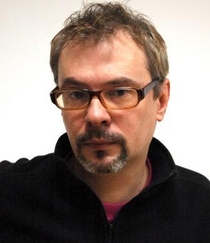
Alex Leo Şerban - And Yet, Why Do We Watch Movies?
20 May 2020Video-streaming On Sunday, January 18th, 2009, at 11 o'clock, at the Black Box Hall, together with Alex Leo Şerban, we invite you to a conference that attempts to answer the question And yet, why do we watch movies? "Following in the footsteps of the book published in 2007 by Polirom and awarded by the Filmmakers’ Union, the conference And Yet, Why Do We Watch Movies? proposes a journey through cinematic Arcadia, trying to answer some practical questions: What are we looking for in a movie? What are the most suitable stories for this art? How do they touch us? When are we most available to see a movie? And: Where is it preferable to see it - in a movie theatre, on TV, on a computer?" Alex Leo Şerban About Alex Leo Şerban He is a film critic and senior editor at Dilema (Veche) magazine. He made his debut in 1976 with a poem in Chicago Review, USA He was a fellow of the French Ministry of Culture, "International Visitor" in the USA, GE / NEC fellow. He taught at the Faculty of Foreign Languages of Bucharest and at UATC, and currently holds a master's degree course at the Center of Excellence for Image Study. He has been on the juries of many Romanian and international film festivals. He has been published in various foreign journals (Cahiers du cinéma, France, Carta di cinema, Italy, Cover Magazine, USA). Collaborates on Elle, Idei în dialog, Libertatea, LiterNet, Observator Cultural, Suplimentul de cultură. Several photography exhibitions (in the country and USA). He wrote (in collaboration with Mihai Chirilov and Ştefan Bălan) the volume Lars von Trier: The Films, the Women, the Ghosts (Idea Publishing House), earning the Prize of the Romanian Film Critics Association and (in collaboration with Şerban Foarta) Jeu de paume (LiterNet, exchange of versified letters in French). Other published books: Robinson's Dietetics (Curtea Veche Publishing House, nominated for the Literary Romania Awards and the Writers' Union Awards) and Why We Watch Films (Polirom Publishing House, Film Critics Award of the Union of Filmmakers). A second volume about (Romanian) film will soon be published by Polirom Publishing House. He supervises the "Film Library" collection of Humanitas Publishing House. He was the only Romanian critic invited to Bernard Pivot's "Double Je" show and was interviewed by "The New York Times". In January 2008, he was voted - following a poll on the Cinemagia website -" The favourite film critic of Romanian moviegoers ". Photo: Rareş Avram Translated by Simona Nichiteanu
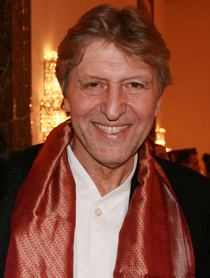
Andrei Șerban: About Chekhov or Who else wants to go to Moscow?
18 May 2020Video-streaming Sunday, the 30th of January, 11:00 o'clock, at the Black Box of the National Theatre, Andrei Şerban will hold a conference named About Chekhov or Who else wants to go to Moscow?. The tickets were put up for sale at the price of 23 and 10 lei. About the conference Through his characters, Chekhov shows us that we, people, are so obsessed of what we would like to be in an ideal manner, so concerned about the future, an illusive future, that we ignore what we are and where we are in the present. Or we design everything in the past, intent upon an idealistic image, sweetened, sentimentalist, of what we once were - a different way of escaping the present and the fear of seeing ourselves just as we are. "To Moscow, to Moscow..." repeat the three sisters obsessively, life would be perfect there... Andrei Şerban - biography In his full international career in theatre and opera in the most important cultural centers from America and Europe, Andrei Şerban accepted to come back home, asked by Ion Caramitru and Andrei Pleşu right after December '89, and he took over the National Theatre board, "hoping to change the old and bony mentality of this institution, to bring it back to life. The Greek Trilogy was the oxygen dose needed to restore an agonizing mechanism. Then, 4 other spectacles followed - attempts to create a flexible climate, open towards the new and the unknown, but after three years he was bound to give up, for causes which do not deserve any commentaries". Şerban is tenured professor and the artistic director of Hammerstein Center for Theater Studies at Columbia University in New York. He received many awards and distinctions: Tony Award, Drama Desk and Obie Awards, George Abbott Award for his career in the American theatre, Eliott Norton and Robert Brustein Awards for his spectacles in Boston, the Romanian Star, many Uniter awards, Doctor Honoris Causa of the Babeş-Bolyai University in Cluj, and during this year, five nominations at the prestigious Golden Mask in Moscow, among others. His book, "A Biography", published by Polirom in 2006, was reprinted. Two photographic volumes, published by ICR, follow his career in images from his theatre and opera performances.
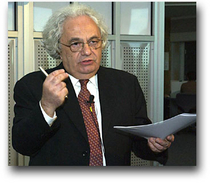
Basarab Nicolescu - Does the Universe Make Sense? The Contemporary Dialogue between Science and Religion
14 May 2020Video-streaming Romanian physicist established in France, honorary member of the Romanian Academy since 2001. Theoretical physicist at the Centre National de la Recherche Scientifique (CNRS), University of Paris VI. He is currently a professor at the Babeş-Bolyai University of Cluj-Napoca. He was born on March 25th, 1942 in Ploieşti. He attended the courses of the Faculty of Physics at the University of Bucharest (1960-1964). In 1965, he defended his diploma thesis entitled Yang-Mills Fields and the Self-Interaction of Vector Fields. He was a teaching assistant (1965-1968) at the University of Bucharest. In 1968, he settled in France, being a fellow of the French government, at the University of Paris VI. Between 1969 and 1970, he was a fellow of the Commissariat for Atomic Energy. In 1970, he joined the CNRS as a physicist, after three years defending his state doctorate in physical sciences (Contribution à l'étude théorique de la diffusion pion-nucléon). In 1973, he introduced a new concept (Odderon), which opened a new field in the physics of strong interactions. In 1976, he obtained French citizenship. He was a "senior visiting scientist" at the Lawrence Berkeley Laboratory (1976-1977) and the University of London (1979), as well as a visiting professor at the University of Girona (Spain) (2000-2001). His oeuvre materializes in over 130 specialized scientific works and in numerous works on transdisciplinarity, all quoted worldwide. Honorary member abroad of the Romanian Academy (November 29, 2001). Honorary Doctor of the "Al. I. Cuza" University of Iaşi (2000). Honorary Citizen of the cities of Iaşi and Ploieşti. Director of the Transdisciplinarity collection (Editions du Rocher, Monaco) and of the Les Roumains de Paris collection (Editions Oxus, Paris). Member of the International Academic Council of the International Institute for Complex Thinking of the University of Buenos Aires. Honorary President of the "Ştefan Lupaşcu" International Foundation for science and culture in Iasi. Awards Silver Medal of the French Academy for the volume Nous, la particle et le monde (1986). Honorary Diploma of the Romanian-American Academy (1987). The Omnia Opera at the Nichita Stănescu International Festival (Ploieşti, 2006), the Romanian Writers' Union Award and the Benjamin Franklin Award for the Best History Book (USA) for Science, Meaning and Evolution - Essay on Jakob Böhme (1993). “Faithful Service" National Order to the rank of Grand Officer (2002). Books Les Racines de la liberté, Éditions Accarias-L'Originel, Paris, 2001, in collaboration with Michel Camus (Romanian translation. The Roots of Freedom, Curtea Veche, Bucharest, 2004); Ion Barbu - Cosmology of "the Second Game", Publishing House for Literature, Bucharest, 1968; second edition: Universul Enciclopedic, Bucharest, 2004); Nous, la particule et le monde, Éditions Le Mail, Paris, 1985 (work awarded by the French Academy , Romanian translation. Prize of the Romanian Writers' Union, 1993; Romanian translation. Science, meaning and evolution - Essay on Jakob Boehme, Vitruviu Publishing House, Bucharest, 2000); La transdisciplinarité (manifesto), Éditions du Rocher, Monaco, 1996 (transl. Transdisciplinarity (manifesto), Polirom Publishing, Iaşi, 1999); Théorèmes poétiques, Éditions du Rocher, Monaco, 1994 (transl. Poetic Theorems, Cartea Românească Publishing, Bucharest, 1996). Translated by Simona Nichiteanu
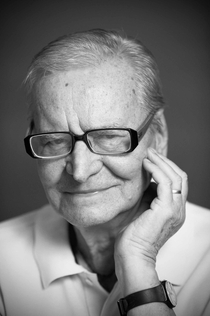
Radu Beligan: My Professors
13 May 2020Video-streaming The actor Radu Beligan returned, on Saturday evening (March 2008), on the stage of the Bucharest National, to an encounter with friends and the audience, talking about his 70-year career on the theatre stage, being applauded for minutes in a row by those over 1,000 colleagues, acquaintances and admirers gathered in the Grand Hall. "I am antiquated, ladies and gentlemen," Beligan stated at the beginning of the meeting with the audience, adding that for 70 years, that is, half of the history of Romanian theatre, he has been on stage without interruption. "The art of the actor cannot be learned at school (...) you can discover the mystery of creation on your own after many years," said Radu Beligan. He told viewers about his exam at the Academy of Dramatic Art and Music, where he was not admitted. After sending a letter to Lucia Sturdza Bulandra, he was accepted to attend classes as an auditor. Beligan also evoked Victor Ioan Popa. He learned from him that "the only kind of theatre that will never go out of style is the one that puts its finger on the living flesh of life" and that "the food of an actor's life is culture." Then, Beligan spoke about his other mentors, such as Aura Buzescu, Alex Giugariu, Ion Iancovescu, Sică Alexandrescu and George Vraca. Among Radu Beligan's professors was Eugen Ionesco. The actor recalled both the difficult moments of the Romanian theatre, during the war, and the happy ones, such as the year he was on tour in Moscow with the show "The Government Inspector" by Gogol. About the show, Beligan said God put "a finger on his forehead." "We learn, we always learn from anything," the actor added. He also mentioned the period when he was the director of the Comedy Theatre, which he founded, featuring shows "played to the joy of the audience and the astonishment of the censors". His last "professor", said Radu Beligan, is the Swiss tennis player Roger Federer. "The secret of longevity is love. As long as you are on earth, love what you want, but love! I love you too, the spectators who have made me what I am and who are my true teachers", concluded Radu Beligan. In the second part of the evening, he was joined on stage by the actor Ion Lucian, who described himself as, in turn, a proof of longevity, after 68 years of theatre with a man he loved and envied all his life. The two actors watched together with the audience the recording of the play "The Supper", by Jean Claude Brisville, in which Beligan and Lucian played in 1997. At the National Theatre, the literary critic Eugen Simion, Mădălin Voicu , actors Gheorghe Dinică, Marin Moraru, Victor Rebengiuc and many other theatre colleagues came to see Radu Beligan. Actor Radu Beligan ceased his activity in November, last year, after suffering a minor craniocerebral trauma and a cervical spine fracture. Among the roles performed by Radu Beligan on the NTB stage, we mention: Leon Saint Pe - "The Navel" by Jean Anouilh, Ianke - "Take, Ianke and Cadar" by Victor Ion Popa, Guglielmo - "The Name of the Rose" by Umberto Eco, The Actor - "The Night Asylum" by Maxim Gorky, Old Man - "The Chops" by Bertrand Blier, Kondilas - "The Legacy" by Titus Popovici, "The Double Bass" (one man show) by Patrick Suskind, Herb Tucker - "I Ought to Be in Pictures" by Neil Simon, Spirache - "Titanic Waltz" by Teodor Muşatescu, Domenico - "Filumena Marturano" by Eduardo De Fillippo, Chereea - "Caligula" by Albert Camus, Romulus - "Romulus the Great" by Friedrich Dürrenmatt, Richard III - "Richard III" by William Shakespeare, drama author - "The Life of a Woman" author and director Aurel Baranga, Robespierre - "Danton" by Camil Petrescu, Ştefan Valeriu - "Holiday Games" by Mihail Sebastian, George - "Who’s Afraid of Virginia Woolf?" by Edward Albee, Iacob Bardin - "Enemies" by Maxim Gorky, Horace, Frederic - "Invitation to the Castle" by Jean Anouilh, Trinculo - "The Tempest" by William Shakespeare, Filipetto - "The Boors" by Carlo Goldoni etc. Translated by Simona Nichiteanu
Adrian Vasilescu: Religion and the Star
12 May 2020Video-streaming On Sunday, November 26th, 2006, at the NTB Black Box Hall, Adrian Vasilescu held the conference entitled Religion and the Star. About the conference Will we join or not the European Union on January 1st, 2007? An obsessive question that concerns the population, businesses, politicians, and government. We are so concerned that we have almost forgotten about the recent incident in the relations with the International Monetary Fund. Of course, the European Union has also faced us with some performance criteria to which the Romanian economy must comply. But first and foremost, it expects Romania to learn even better how to use its monetary resources efficiently, as many as they are, in order to reduce inflation and stimulate development. A cardinal problem, in this sense, is the distribution of money resulting from internal savings. Because the state budget has drastically limited their access to this money, so that it becomes more available to the private sector. Since then, the pressure on interest rates has begun to fall and economic development has been better stimulated. One of the reasons why the European Union - doubling the International Monetary Fund - is asking us for a low budget deficit is precisely to increase the chance of supplying money to the private sector. Without having taken this decisive step in the 2000s, we would not have been able to cope in any way with the wave of globalization that is sweeping the world in which we live. Our European integration is closely linked to the ability to find optimal answers to the challenges of globalization. For us Romanians, this planetary problem is accompanied by many local details, summarized in an essential question: A "How do we want to live and what do we do to get out of the red light of living standards? A question we can not separate, no matter how "sectoral" it is, from nowadays globalism, which has as its religion the GDP growth and as an indisputable star the economic efficiency. So here are the landmarks: how much GDP we make and what kind of rhythm we set for economic efficiency. Looking into the mirror of a world obsessed with growth and trying to find our answer to the question of how we manage (or fail) to meet the challenges of globalization, we can not omit an essential question: what kind of horse we ride. We are very aware that we do not feel underneath us a sorrel, to run like lightning, but a modest horse, too little accustomed to the market economy and without speed of reaction. Our race is slowly evolving, and the fear of reform has become a chronic disease. Restructuring production in state companies and large state-owned enterprises is progressing slowly. Monopolistic positions continue to be sacredly guarded. The population is scared of commodity prices and service tariffs, which are rising slowly, but steadily. Consumer price indices have continued this year as well, especially towards the end of it, to give unprofitable businesses the illusion of survival through inflation. State manufacturers are still trying to make their game as usual: to live on high prices, which cover exaggerated costs, reject production, waste and theft, while their supply of goods has remained limited. Paradoxically, the solvent demand has picked up. The main drivers that could set the economy in motion are competition and free markets. However, as these engines were only partially put into operation, the Romanian society continued to consume more than it produced, resulting in serious deficits. They were reflected and are reflected in the budget, but also in the external imbalance. So if we want to ride the wave of globalization well - to stay in the spirit of this exciting parable - we will need to turn our horse, if not into a thoroughbred, at least into a competitor of average value. How? We have no reason to hope that it could happen as the story goes: to feed him a tray of embers, which would turn him into a proud long-distance runner. Because one tray won't be enough. It takes a lot of embers. In this sense, it would be good if at least now, at the nick of time, when we are only a year, a month and a week away from January 1st, 2007, we would understand that economic efficiency becomes a cardinal need. And that we have to learn to do a lot with little money, not like before when we did a little with a lot of money. The fact that, since 2000, we have already begun to conquer some of these strongholds, seems unusual to us. And maybe even incredible. We, who have learned to stagnate, find it harder to notice that something is really moving. But that's because the imbalances in the economy still give us headaches. There are enough: extrapolation of waste, mismanagement, fraud and corruption; work motivation continues to fade away; delays in multiplying the incentives that determine the extension of free initiative in production. But one of the most sore points is the average monthly salary in Romania. A salary below the level of prices, well below this level, but also above the level of productivity and efficiency. Here is the key to the problem. About Adrian Vasilescu Advisor to the NBR Governor. Born on March 23rd, 1936. Professional certificates in economics, law and journalism. Debut in journalism in 1962, at Scânteia tineretului. Over four decades of journalistic career; commitments to newspapers, magazines, radio and television stations. Until 1996: associate professor at the Academy of Economic Studies and at the Higher School of Journalism. Since 1996: coordinator of the communication strategy at the National Bank of Romania. In 2000, at the Government, a member in the team of advisors to Prime Minister Mugur Isărescu. Since 2001: return to the National Bank, to the advisory team of the NBR governor. Translated by Simona Nichiteanu
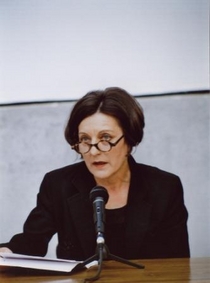
Herta Müller: Always the Same Snow and Always the Same Uncle
07 May 2020Video-streaming On Sunday, April 13th, 2008, the Black Box Hall of the National Theatre will host the conference held by Herta Müller, "Always the Same Snow and Always the Same Uncle", starting at 11.00 a.m. About the ConferenceThe metaphorical title of the conference stems from the German phrase "yesterday's snow", which refers to things that have become obsolete, which should no longer be taken into account. However, according to the author, the experience of deportation to the Soviet Union, which her mother suffered in 1945, is similar to the experience of the writer's emigration to Germany in the 1980s - in both cases, snow plays a dramatic role; just as in both cases, Soviet investigators and examiners at the German Federal Immigration Office behave in the same brutal and abusive manner. Hence, the idea that yesterday's snow had an overwhelming significance, because otherwise why would you need to remember and get rid of it today? About Herta MüllerShe was born in 1953 in Nitzkydorf, Banat. She worked, after graduating from Romanian and German philology, first as a translator in an industrial equipment factory. But she was soon fired, because she refused to cooperate with the Romanian Intelligence Service. Her first book, Niederungen ("Plains"), completed in 1978, was not accepted for publication, and it was not until 1982 that it saw the light of print in a censored form. The original version would appear in Germany in 1984. The threat from the Romanian Intelligence Service continues, forcing Herta Müller to emigrate to Germany in 1987. Several invitations to teach at various universities take her to England, the United States, and Switzerland, and recurring themes in the author's poetry and prose are: separation, emigration, leaving a place without reaching a destination. Her oeuvre has been awarded numerous prizes, including the Franz Kafka Prize, the Aristeion European Literary Prize, the International IMPAC Dublin Literary Award, the Konrad-Adenauer Foundation Prize for Literature, or "Berliner Literaturpreis". Herta Müller currently lives and creates in Berlin. Translated by Simona Nichiteanu