NTB Conferences
Order

Sever Voinescu in dialogue with Valeriu Stoica
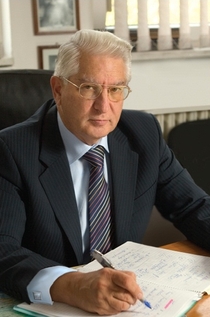
13 October 2019The new season of the National Theatre Conferences will debut in October, a month dedicated to a partnership with the Dilema Veche magazine. The chief editor of the magazine, Sever Voinescu, will be in dialogue with Valeriu Stoica, former Minister of Justice (October 13th, 2019, at the Black Box Hall) and with the theatre critic George Banu (October 20th, 2019, the Black Box Hall). Both conferences will start at 11.00 am! On Sunday, October 13th, 2019, from 11.00 am, the NTB Black Box Hall will host the conference Sever Voinescu in dialogue with Valeriu Stoica. The business of law and the law of business. About the conference“The world is in search of justice since always and all that we can find, apparently, is personal satisfaction or dissatisfaction. How do we relate to justice? Do we have any idea what is right before we let our eyes cry to see it? But maybe justice is one of those ideals that we all strive for without even being able to define it rationally. Then maybe it is better to negotiate it. Isn't that exactly what democracy is teaching us? For a long-quoted ancient wiseman, law is the art of good and equity. But if it is the art of negotiating the satisfaction we often call "justice"? Law is a precise science, with clear rules, of impeccable logic, often akin to mathematics. But as long as the right is rigorous, so much as its object - justice - is capricious. Doesn't law, after leaving academic treaties, become a business rather than a law? And if so, is that really bad?In a Romania really obsessed with prisons, corruption and criminal laws, in order to better understand what justice should be and what the role of law should be in society, it is more appropriate to look at a field crucial to our common good, where the law also plays an essential role, but which does not cause too many passions: at the business field. We all have lessons to learn from the business world. Among others, can we understand, carefully looking at the business world, what justice is in fact? ” Sever Voinescu Sever Voinescu (b. 1969, Ploiesti) graduated in 1992 from the Law Faculty of the Bucharest University. Since 1994, he has acted as a lawyer in the Bucharest Bar. 1994 - 1996: teaching assistant at the Department of Law of the Academy of Economic Studies in Bucharest. 1998 - 2000: Secretary General of the Ministry of Foreign Affairs. 2000 - 2003: General Consul of Romania in Chicago. 2004 - 2008: Coordinator of the Foreign Policy Programme at the Institute for Public Policy. 2008 - 2012: Member of the Romanian Parliament, for the entire term of office leading the Parliament Delegation to the NATO Parliamentary Assembly. Since January 1st, 2016, he is the editor-in-chief of the cultural weekly Dilema Veche and, as of the same year, he produces the weekly programme Christiana Europe on Trinitas television. Since 1993, he has published over 3,000 articles, comments and essays in cultural or daily publications such as Dilema/ Dilema veche, 22, Observator cultural, Cotidianul, Evenimentul Zilei. He has contributed to the content of several volumes and is especially proud of a book dedicated to opera, called Canta che ti pasa - Talks with Virginia Zeani. Valeriu Stoica (b. 1953, Bucharest) is a politician, lawyer and professor of civil law at the Law Faculty of the Bucharest University. He became a member of the National Liberal Party in 1990, was its vice-president from 1997 to 2001 and president of the party from February 2001 to August 2002. He was the Minister of Justice in the governments led by Victor Ciorbea, Radu Vasile and Mugur Isarescu. In 2006, he left the PNL and became a founding member of the Liberal Democratic Party. Valeriu Stoica is a founding partner of the Stoica & Asociaţii Civil Society of Lawyers, where in recent years he has created one of the most important law firms in Romania, specialized in civil and commercial litigation. He is the author and co-author of a large number of legal works in the fields of civil law, commercial law, human rights. Translated by Simona Nichiteanu

Marian Voicu: The Romanian Treasure in Moscow - a Historical, Political or International Law Issue?
16 June 2019Video-streaming On Sunday, June 16th, 2019, from 11.00 a.m., the TNB Small Hall shall host Marian Voicu’s conference on the topic of The Romanian Treasure in Moscow - a Historical, Political or International Law Issue? About the Conference It is Romania's oldest litigation. 100 years, two world wars, revolutions, coups, waves of famine and deportations have passed since. The world has undergone tremendous transformations, but the matter of the Treasure has remained the axis on which the Romanian-Russian vane still pivots. For most of the Romanians, the Treasure means the gold of the National Bank of Romania. Yet it represented less than one-tenth of the value of the goods evicted to Russia in 1916 and 1917. The Romanians then dispatched the treasures of the National Bank and of the Deposits and Consignments Office, private banks and public institutions, Crown jewels, the most important art objects from museums and private collections, monasteries, numismatic collections, state archives, diplomatic archives, manuscripts, rare books, and finally, as a heritage, the identity of the Romanian nation since the 14th century. However, inventories are, with the exception of the NBR gold, incomplete and never centralized. After more than 100 years, the fundamental questions remain the same: what have we sent and what have we received? Is there still a topical Treasure issue? Does it pertain to political, historical or international law? What is the Romanian-Russian legal department? How important are the new documents that continue to appear? There is no similar dispute in the world. If for 100 years, Romanians have been talking about the Romanian Treasure, the Russians prefer to talk about the history of the Romanian Treasure. For Romanians, solving the Treasure issue would improve the bilateral relationship. For the Russians, improving bilateral relations would lead to the Treasure's problem solving. Is this an inextricable situation? Marian Voicu About Marian Voicu Marian Voicu is a journalist and documentary filmmaker. He has worked for over 20 years on television and radio as a moderator and producer of various journalistic formats. For ten years, he has documented for the Romanian National Television the Romanian communities - from Istroromans and Aromanians to Romanians over the Bug and those from the Russian Federation. He was a project manager at Radio Romania Kishinev, a broadcaster released in 2011. The most recent documentary films include Breaking Fake News: The war after the Cold War? (2017) and Torna, torna, fratre: The Aromanian story told by themselves (2015). He has published the Matrioshka of Liars: Fake news, manipulation, populism (Humanitas, 2018), Cotovschi's Dream, in the collective volume The Russians are coming! (Humanitas, 2018) and the Romanian Treasure of Moscow: The Inventory of a Century-Old History (Humanitas, 2016). He has received several national and international awards, most recently the Gold Medal of the United Nations Correspondents' Association for the documentary film Exodus: A Syrian Tragedy (2015). He was decorated with the Faithful Service National Order to the rank of Knight (2014). Translated by Simona Nichiteanu

Dan Dungaciu: Europe after the Storm. What Do Europeans Really Want?
02 June 2019Video-streaming On Sunday, June 2nd, 2019, from 11.00 a.m., the NTB Black Box Hall shall host Dan Dungaciu’s conference entitled Europe after the Storm. What Do Europeans Really Want? About the conference The conference looks at developments in the EU after the "perfect storm" it faced about five years ago. The "perfect storm" meant the synchronicity of phenomena such as the economic crisis, migration waves, a succession of terrorist attacks and Russia's threats. The effect of this genuine "Molotov cocktail", which includes Brexit or Donald Trump's election in the United States, is the almost radical change in the political configuration of the continent. The disappearance of the political "centre" and so-called populist parties have become everyday reality. Nothing has remained unaffected, if not in form (traditional "mainstream" parties), then in content (their political discourse). What's next? Where does Europe head to? What are the values that hold us together? How muchis misinformation or fake news and how much natural evolution? What is the international relevance of our continent? How does the world of America and the world of Europe look like? Anti-Americanism is Westernism or Anti-Westernism? Are we witnessing the "decline of the West" or the break-up of Euro-Atlantic relations? What is the price paid by European civilization? All of this in a conference that, even if it does not have all the answers, will ask, at least, the right questions. Dan Dungaciu About Dan Dungaciu Dan Dungaciu is a Ph.D. Coordinator at the Faculty of Sociology and Social Work of the University of Bucharest (Department of Sociology) since 2009. He is the coordinator of the Master of Security Studies and Information Analysis at the University of Bucharest (Faculty of Sociology and Social Work), the oldest profile master in Romania. Since 2011, he is the Director of the Institute for Political Science and International Relations of the Romanian Academy "Ion IC Bratianu". Since 2013, he has been President of the Black Sea University Foundation, under the aegis of the Romanian Academy. In 2006-2007, he served as Deputy State Secretary at the Ministry of Foreign Affairs (Department for Romanians Abroad) and during 2009-2010 he was Counselor on European Integration Issues to the President of the Republic of Moldova. He is a member of several international and national associations. He has been involved and has coordinated countless national and international projects. He is the author of dozens of specialized studies, specialized reports and over 25 volumes of the profile, counting among the most recent: Is Bessarabia Romania? Identity and (geo) political dilemmas in Moldova (2011), Elements for a theory of nation and nationalism (2012), Seven fundamental themes for Romania (2014), Encyclopedia of International Relations (2015), etc. In 2015 he was co-opted at the level of the Romanian Academy in the team of developers / coordinators of Romania's Development Strategy for the next 20 years (2015-2035), under the general coordination of the President of the Romanian Academy. Among the most recent published / coordinated volumes, we mention: Romania: 100 Years since the Great Union (Editor), Cambridge: Cambridge Scholars Publishing, 2018; The Perfect Storm of the European Crisis (Editor), Cambridge: Cambridge Scholars Publishing, 2017; Encyclopedia of Diplomacy (coordinator and author), Bucharest, RAO Publishing House, 2018; Encyclopedia of Romanians Abroad (coordinator and author), Bucharest, RAO Publishing House, 2018; Encyclopedia of International Relations (coordinator and author), vol. I and 2, Bucharest, RAO Publishing House, 2017; Nihil Obstat. Elements for a Theory of Nation and Nationalism, revised and ammended edition, Libris Publishing House, 2018; The Reunification (co-author Petrişor Peiu), Bucharest, Litera Publishing House, 2017. Translated by Simona Nichiteanu

Gheorghe Florescu: Our DailyCoffee and Dissent
19 May 2019On Sunday, May 19th, 2019, from 11.00 a.m., in the Tapestry Hall, Gheorghe Florescu shall hold the conference on Our DailyCoffee and Dissent. About the conference The great revolutions of mankind were born after coffee talks. The aromatic beverage puts the mind on the move, and progress is born from the ensuing conversations. History records countless examples in this respect. How did a good cup of coffee (tediously procured) help the Romanians to withstand socialism and how does quality coffee benefit the consumer nowadays? Gheorghe Florescu shall respond to all of this at a conference on May 19th, 2019, where spectators shall be able to savour one of the world's finest coffees, Kenya Top Peaberry. About Gheorghe Florescu Gheorghe Florescu was born on May 8th, 1944, during an Anglo-American bombing in Bucharest. At the age of eight, after the arrest of his father, a former state security detective, he began to work as a shop boy, then as the help of his uncle Olten who sold in Vitan Square. He graduated from high school, but he does not think he has the necessary conditions to follow the Faculty of History, as he would have liked. He marries and, after completing the military service, engages in state trade. From 1964 to 1971, he goes through all the operative functions of wholesale trade (receiver-distributor, dispatcher, head of department of the Pandu DelicatessenWarehouse within the Import Agency). In March 1971, he took over from his mentor, the Armenian cafe owner Avedis Carabelaian, the coffee and sweets shop from 10 Hristo Botev Blvd. Gradually, this place became a true landmark of the capital’s artistic bohemian society. Here, he hosted great personalities of the literary, artistic and medical life, as well as important figures from Justice, Militia and Security. On March 4th, 1977, the block of 10 Hristo Botev collapsed, but, by extraordinary luck, he escaped alive. In the 1980s, the struggle to supply his new store in 6 Sfintii Street was extremely risky. In April 1985, he was arrested and sentenced to 11 years in prison. Released on parole in 1988, he engaged again in commerce. He participated in the Romanian Revolution, then in the «University Square phenomenon» as a personal driver to American journalists. In October 1990, he suffered a stroke, which left him with a right side hemiparesis. He resurfaces to write with his left hand, and in 2007, after four years of intense work, he manages to finish the memorial book Confessions of a Coffee Lover. A volume in which the author amazes us with surprising revelations, shrouded in the flavour of coffee and centered on the reality of the last years of the Ceausescu regime, suffocatingly besieged by endless queues, speculation and all sorts of arrangements. Translated by Simona Nichiteanu

Ioan Stanomir: Romania, 1989 / 2019 - a Photograph, after Thirty Years
05 May 2019Video-streaming On Sunday, May 5th, 2019, from 11.00 a.m., Ioan Stanomir shall hold the conference entitled Romania, 1989 / 2019 - a Photograph, after Thirty Years. About the ConferenceWhere are we, three decades after 1989? What are the factors that shaped contemporary Romania? What is the place of this interval during the 19th century since 1918? These are the questions from which the present conference departs. It does not intend to give definitive answers, but only to encourage the exercise of patriotic lucidity. Without the latter, our homeland cannot build a future based on freedom and human dignity. Ioan Stanomir About Ioan StanomirIoan Stanomir is a professor at the Faculty of Political Science at the University of Bucharest. The published volumes include Conservative Consciousness: Preliminaries to an Intellectual Profile (2004), A Vanished World: Four Personal Histories Followed by a Dialogue with H.-R. Patapievici (co-author, together with Paul Cernat, Angelo Mitchievici and Ion Manolescu, 2004), Explorations in Romanian Communism (coauthor, Paul Cernat, Angelo Mitchievici and Ion Manolescu, vol. , Conservative Spirit: From Barbu Catargiu to Nicolae Iorga (2008), OnSounds and Memory: Fragments of the History of Ideas (2009), The Defense of Freedom (1938-1947) (2010), Teodoreanu Reloaded (with Angelo Mitchievici, Shadows on the Canvas of Time: Sequences of Intellectual History (Humanitas, 2011), Junimism and the Passion of Moderation (Humanitas, 2013), The Russian Sphynx: Ideas, Identities and Obsessions (2015), Communism inc. (alongside Angelo Mitchievici, Humanitas, 2016), Russia, 1917: The Bleeding Sun. Autocracy, Revolution and Authoritarianism (Humanitas, 2017), essay Shadow of Russia in the collective volume The Russians Are Coming! 5 Perspectives on a Dangerous Neighborhood (Humanitas, 2018), At the Centenary. Rereading the Century of Great Romania (Humanitas, 2018). Translated by Simona Nichiteanu

Adrian Cioroianu: The Future Is No Longer What It Used to Be
21 April 2019Video-streaming On Sunday, April 21st, 2019, at 11.00 at NTB’s Black Box Hall, Adrian Cioroianu shall hold the conference The Future Is No Longer What It Used to Be. About the Conference The characteristic of our time is that we all have the feeling of imminent changes that are foreshadowing globally. The open and peaceful world that came to an end with the fall of communism in Europe in 1990 did only materialize in part. Today, borders seem to close again and unexpected conflicts occur even in the hearts of Western societies. In parallel, for the first time in the history of civilization, technological progress is so rapid that human understanding can no longer keep pace with it. In other words, we are progressing so fast that the very idea of progress seems rather a threat than a promise. Engineers, physicians and philosophers, together, tell us that we are about to enter the "transhuman" age - that is, the creature that we are, of the flesh, brain and joints, can be improved even before it is born, so that we shall be immune to diseases and we can all be, why not, as intelligent as geniuses. However, beyond these pink scenarios, there is also a fear that one day the machines we are creating might get out of hand - or even control us. I suggest that we meditate together on some of the directions of these changes: we shall talk about family and school, about politics and about possible future wars, about the search we are trapped in, and about what we might find at the end of the road. Adrian Cioroianu About Adrian CioroianuBorn in 1967 in Craiova, he is a historian, journalist, essayist, politician (he served as Foreign Affairs Minister within the Tariceanu Cabinet from 5 April 2007 to 15 April 2008).Professor at the Faculty of History at the University of Bucharest, he is the author of several Romanian history books (and especially of the history of Communist Romania). He is also known as co-author of high school textbooks. Member of the Social Dialogue Group, he joined the National Liberal Party and was elected to the Romanian Senate for Timis County in 2004. After Romania's accession to the European Union on 1 January 2007, he served as MEP, member of the Alliance of Liberals and Democrats for Europe (ALDE) and vice-chair of the ALDE Group in the European Parliament. On April 5th, 2007, Cioroianu became Minister of Foreign Affairs in the reshuffled Tariceanu government. Since 2012, he is a dean of the Faculty of History of the University of Bucharest.Starting from 2015, Adrian Cioroianu is the Ambassador of Romania to UNESCO. Translated by Simona Nichiteanu

Andrei Oisteanu: Jews of Romania in a European context: similarities and differences
07 April 2019Video-streaming On Sunday, April 7th, 2019, at 11.00 at the NTB Small Hall TNB, Andrei Oisteanu shall hold the conference on the Jews of Romania in a European context: similarities and differences. About the Conference The history of the Jews in Romania is less well known in the world. Other Jewish communities in Eastern Europe (Russia, Poland and even Hungary) were more vocal and more visible. I am trying to colour this stain, if not white, at least gray. Especially because it was a large and important community. In 1939, the Great Romanian Jews counted about a million souls, being the third community in Europe and the fourth largest in the world, after Poland, the Soviet Union, and the USA. A quasi-heterogeneous, but unitary community with a special contribution to Romania's political, economic and cultural history. One third of them died in the Holocaust, others fled from communism. The fundamental event that marked the difference between the Jews in Romania and those in Europe was the failure to grant Romanian-Jewish citizenship with the adoption of the "liberal" Constitution of 1866. Romania missed the synchronization with Europe, a fact with major socio-political-cultural consequences: the emergence of economic antisemitism (in addition to the racial and religious one); the strengthening of their own community institutions; the premature emergence of the Zionist movement in the Romanian space, etc. The Jews in Romania are different because (and to the extent that) Romania is different. Andrei Oisteanu About Andrei Oisteanu Andrei Oisteanu is an anthropologist, historian of religions and mentalities, being a member of the Scientific Council of the Institute of Religious History (Romanian Academy). He is associate professor at the Hebrew Studies Center (Bucharest University). He is a member of the Social Dialogue Group. In recent years he published the following books at the Polirom Publishing House: The Image of the Jew in Romanian Culture (2012), a book translated into English, German, French, Hungarian and Italian (several awards in Romania, Italy, Belgium, Israel, , B'nai B'rith Europe Award, Writers Union Award - Bucharest Association); The Garden of the World Beyond (2012); The Box with Old People (2012); Order and Chaos. Myth and Magic in Traditional Romanian Culture (2013), translated into English and Italian; Religion, Politics and Myth. Texts about Mircea Eliade and IP Culianu (2014); Narcotics in Romanian Culture (2014), translated into German (Special Prize of the Writers’ Union); Sexuality and Society. History, Religion and Literature (2016, 2018), English translation (The Writers of the Year 2016 Award). Andrei Oisteanu was awarded by the Romanian President the Order of the Star of Romania (2006) and by the Italian President the Order of Stella della Solidarietà Italiana (2005). Translated by Simona Nichiteanu

Prof. Viorel Barbu: Mathematics and Arts
24 March 2019Video-streaming On Sunday, March 24th, 2019, from 11.00 at the NTB Black Box Hall, Professor Viorel Barbu shall hold a conference on Mathematics and Arts. About the Conference The conferenceaims at answering the following questions: Is maths beautiful? Are there mathematical approaches to poetry? How did mathematical theories influence the techniques and ideas of artists? What is the relevance of mathematics in classical and modern art? Is there a mathematical poetics, in fact? Prof. Viorel Barbu About Viorel Barbu Born on June 14th, 1941 in Deleni, Vaslui. High school studies at "Mihail Kogălniceanu" High School in Vaslui and "Costache Negruzzi" High School in Iaşi (1954-1959). University studies at "Al. I. Cuza" University of Iasi, Faculty of Mathematics (1959-1964). Professor at "Al. I. Cuza "University of Iasi (1980-2011). Guest professor at the Universities of Rome (1970), Superior Normal School of Pisa (1980, 1990, 1995), University of Cincinnati (USA) (1991-1993), Ohio University (USA) (1995, 2000), University of West Virginia (1970), University of West Virginia USA) (2005) and Visiting Scholar at the Universities of Bonn (2006), Bielefeld (Germany), Paris VI (France), Trento (Italy). Member of the Romanian Academy (holder since 1993); Member of the European Academy of Sciences (since 2007); President of the Mathematics Department of the Romanian Academy (since 2010) and President of the Iasi Branch of the Romanian Academy. Author of 10 mathematical monographs at the publishing houses Springer-Verlag, Academic Press, Birkhäuser, Kluwer, Pitman (London), Noordhoff (Leyden). Translated by Simona Nichiteanu
Prof. Alexandru Vlad Ciurea MD, PhD., MSc., Dr. hc Mult.: Alzheimer’s Made Simple
10 March 2019On Sunday, March 10th, 2019, from 11.00, the NTB Black Box Hall shall host the conference of Prof. Alexandru Vlad Ciurea MD, PhD., MSc., Dr. hc Mult., entitled Alzheimer’s Made Simple. About the conferenceAlzheimer's disease was described by the German psychologist Alois Alzheimer in 1906 after the neurological trauma of the patient Auguste Deter, the disease being characterized from the outset as a disease of forgetfulness. The autopsy of the patient revealed a major cortex atrophy and amyloid deposits in the neurons, as well as neurofibrillary changes. Over time, the disease was defined as a dementia disorder with the alteration of mental processes and primarily affecting cognitive activity, memory disturbances and changes in patient behaviour.Alzheimer's is currently an important form of dementia with a major incidence (over 6 million American citizens were diagnosed in 2018). The number of cases diagnosed with Alzheimer's both in the US and in Europe is steadily rising due to nervous system overwork, sleep deprivation, and disorderly life, stress, and associated pathology.Alzheimer's is considered incurable, with a long preclinical period and a progressive course of the disorder, from minor to severe forms. Many political, artistic and sports personalities have died from this disorder, and the main therapeutic method is prevention (diet, lifestyle, connections, social life, music, tourism and positive thinking, etc.). Alexandru Vlad Ciurea About Alexandru Vlad Ciurea1974: PhD in Medical Sciences; 1979 - present: Chief Physician Neurosurgeon 3rd degree; 2007: Master’s degree in Health System Management. Professional experience: 1997 - present: Professor of Neurosurgery, University of Medicine and Pharmacy "Carol Davila" Bucharest; PhD Coordinator; 2004 - 2008: Prodean University of Medicine and Pharmacy "Carol Davila" Bucharest; 2009 - present: First degree scientific researcher; 1999-2011; 2014 - present: Chairman of the National Committee for Neurosurgery of the Ministry of Health. Publications: Neurosurgery Treatise, Ciurea AV, Romanian Academy Publishing House, 2007; Neurosurgery Treatise, Vol. I and Vol. II, Ciurea AV (coordinator), Medical Publishing Bucharest, 2010/2011; Intracranial Hypertension, M. St. Iencean, Ciurea AV, Nova Biomedical, New York, 2009; main author of 35 treatises and monographs published in Romania and abroad. Major distinctions:"Commander" National Order, granted by the President of Romania, Emil Constantinescu "For the Defense of Public Health", 2000; Honoris Causa awarded by six universities: Galati, Oradea, Kishinev, Iasi, Pitesti, Constanta ; Visiting Professor at 11 universities (eg. Harvard University - Boston, INI - Hannover, Mercer University - Atlanta). Special scientific contributions:Construction of the first bank of tumour tissues in Eastern Europe (2003); One-tube drain (2005); Coordination of construction National Centre of Excellence in Neurosurgery under the aegis of the Ministry of Health, 2005; Hidden Anatomy in Michelangelo's Work, Certificate of Innovation registered at OSIM in 2011. Translated by Simona Nichiteanu

Toni Grecu: Let Us Be Joyful Lest We Are Sad
24 February 2019Video-streaming On Sunday, February 24th, 2019, from 11.00 at the NTB Small Hall, Toni Grecu shall hold the conference with the topic Let Us Be Joyful Lest We Are Sad. About Toni Grecu Born in 1959 in Iasi, Toni Grecu attended the Electronics and Telecommunications Faculty of Iasi, performing shows either individually or in various formulas in the student literary circles. At the same time, he launches together with other colleagues the Divertis Group. The engineering career is short, intense and insignificant, but helps him reach Bucharest, where, immediately after the Revolution, he gives up computers and devotes himself exclusively to artistic activity, both on stage and on television. In the eighties, Divertis goes on several tours around the country at student events such as the Amphitheater Galas, the Moldavia Literary Circle, the Sea or the Snow Celebrations. In 1983, he won the first prize at the National Student Humour Festival, both individually, at the monologue section and with Divertis. In 1988, alongside Doru Antonesi, he writes the text for the one-man show "I am Staying Home Tonight", staged by Silviu Purcarete and starring master Stefan Iordache at the Small Theater. It was an appreciated performance, unique in its way primarily for the courage and harshness of satire on topical subjects. The representation, which was sold out, seemed to predict the end of the communist regime. Since 1990, he has been working with Divertis on television, first on TVR and then on Pro TV and Antena 1 as a presenter and screenwriter. Along with Divertis, he has performed over 1,000 shows and hundreds of TV shows, achieving true audience records. He retires from Divertis in 2008 and continues the series of TV shows in a new formula with the project "Romanian Comedy Service" at Pro TV for another five years. He then creates the news comedy show "Superjournal" at Digi24 for two seasons in 2015. Meanwhile, he and Adrian Onciu write together the script of the comedy The Bride Was Stolen in 2012 and produce the sitcom Dementia Hospital in 2012-2013 also for Pro TV. Following the general trend, in 2016, he began working as a screenwriter and developer of comedy projects for the online environment that gathers millions of views. He resumes the stage activity and, together with Catalina Grama - Jojo, Catalin Neamtu, Claudiu Maier and Cosmin Natanticu, he creates the humour show One day in my life, a mix of comedy of several genres, monologue, impro, sketch, stand-up , parody, imitation, which shall soon be resumed in a new season. Toni Grecu, who in 2010 received the UNITER Award for Entertainment, "for His contribution to the living history of Romanian humour," shall hold a conference on humour, schadenfreude and pool cormorants at the Bucharest National Theatre. Translated by Simona Nichiteanu