Conferences
Dorana Coşoveanu: When the Paintings Were Shot
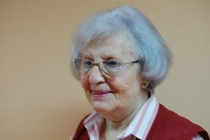
On Sunday, November 29th, 2009, at 11 o'clock, at the Black Box Hall, we invite you to the conference held by the art historian and critic Dorana Coşoveanu, entitled When the Paintings Were Shot.
Art historian and critic, member of the Fine Artists’ Union, Dorana Coşoveanu is a permanent collaborator of several cultural radio and TV shows, initiator of modern fine art exhibitions, in the country and abroad.
During the communist period, she had a complicated professional career, full of obstacles due to her father 's status as a political prisoner, Ion Coşoveanu, who spent 17 years in detention.
Rejected by several faculties - Philology, Fine Arts, Drama - she finally managed to finish her studies at the Academy of Arts - Department of Art History and Theory (1966) and Fresco Restoration (1967). She then chose the position of museographer-researcher at the RSR Art Museum.
From 1966 to December 1989, she was a curator, editor, museographer at the European Art Gallery of this museum. She published studies, catalogs, scientific communications, press articles, monographs, including: The Dutch Landscape in Seventeenth-Century Etching (1975, Meridiane Publishing), French Etching in the Seventeenth Century (1978, Meridiane Publishing), Octav Grigorescu (1985 , Meridiane Publishing), Sever Frenţiu (2000, Meridiane Publishing), Camilian Demetrescu (2000, Official Gazette), Cela Neamţu (2002, Official Gazette), Rodica Lazăr (2006, Humanitas), Iacob Lazăr (2006, Humanitas).
The revolution of December '89 is the decisive event that turns the woman of study into a fighter for the defense of heritage, considering that it is not a "greater iniquity than trying to destroy and overthrow the scale of values in the culture of a nation."
In January 1990, the illustrious art historian Theodor Enerscu and the Deputy General Director, Dorana Coşoveanu, were appointed General Director of the National Museum of Art. The management of the two, beneficial for the museum, in the most difficult period of restoration and international establishment of the museum, was only four years (until 1994).
From 1997 to 2000, Dorana Coşoveanu was a Ministerial Adviser at the Ministry of Culture.
In the post-revolutionary years, she was active as a member of the Civic Alliance and a founding member of the Civic Academy Foundation, in which she collaborated on the museographic project of the Memorial to the Victims of Communism and Resistance, in Sighet.
In December '89, Dorana Coşoveanu, historian, art critic and museographer of the National Art Museum of Romania, was protecting and storing the most important works of the European Gallery (Rubens, El Greco, Memling, Van Eyck, etc.), before the nightly fire of the building started. Ensuring permanence in the museum, between December 21st-25th, she managed - together with some brave collaborators - to protect and store major works of art, during the "terrorist" deployments in the palace. Patricia Coste, editor at Antene II - Paris, broadcast some of these actions, generating the wave of sympathy and mutual aid of some great western museums.
The revolution of December '89 is the decisive event that turns the woman of study into a fighter for the defense of heritage, considering that it is not a "greater iniquity than trying to destroy and overthrow the scale of values in the culture of a nation."
In January 1990, the illustrious art historian Theodor Enerscu and the Deputy General Director, Dorana Coşoveanu, were appointed General Director of the National Museum of Art. The management of the two, beneficial for the museum, in the most difficult period of restoration and international establishment of the museum, was only four years (until 1994).
From 1997 to 2000, Dorana Coşoveanu was a Ministerial Adviser at the Ministry of Culture.
In the post-revolutionary years, she was active as a member of the Civic Alliance and a founding member of the Civic Academy Foundation, in which she collaborated on the museographic project of the Memorial to the Victims of Communism and Resistance, in Sighet.
In December '89, Dorana Coşoveanu, historian, art critic and museographer of the National Art Museum of Romania, was protecting and storing the most important works of the European Gallery (Rubens, El Greco, Memling, Van Eyck, etc.), before the nightly fire of the building started. Ensuring permanence in the museum, between December 21st-25th, she managed - together with some brave collaborators - to protect and store major works of art, during the "terrorist" deployments in the palace. Patricia Coste, editor at Antene II - Paris, broadcast some of these actions, generating the wave of sympathy and mutual aid of some great western museums.
During the conference, a film made by TVR on January 3rd, 1990 (editor Mihaela Creţulescu) will be screened, which presents the damage caused to works of art.
"A day as a human being is better than a thousand days as a shadow," says a Chinese proverb. My revolution - because each of us believes he is the owner of one, strictly personal - made me feel truly human. That is why I cannot forget it and cannot help but love it. It persuaded me, once again, that the spirit is incapable of doing anything without the illusion of freedom. (Dorana Coşoveanu)
Translated by Simona Nichiteanu