News
Shakespeare 400
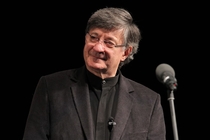
The speech delivered by Ion Caramitru at the Romanian Academy, in his capacity as Shakespeare Ambassador, within the framework of the symposium "Shakespeare in Romania, Shakespeare in the World" marking the quatercentenary commemoration of the death of the author.
„Great Britain has launched the motto ”Shakespeare is Alive” for the 400 years since his death, hoping to perpetuate his memory – which shall not require tremendous efforts - , but also for honouring in every country of the world, those who have served, in an artistic way, the Shakespearean ideal. To me, Shakespeare represents the sole playwright who masterfully blended poetry and prose, giving life to characters (with the necessary realism), seemingly drawn from reality and accompanied by a magical lyricism, shaping them directly under our very eyes.
Furthermore, what adds to his commemoration, simultaneously with the anniversary of his contemporaneity, is recalling the fact that his favourite subject is man and his passions. As man’s life cycle has not changed, as he is perpetually born, lives and dies, and as Shakespeare is always interested in describing what dominates man in different moments of life, we always encounter in his plays what we see around us, day by day. The struggle for power, murder, betrayal, theft, hidden vices, the awakening to bleak realities or condemnable naïvetés are present both in life and in his drama.
Certainly, the material aspects of our world are distinct, but what kind of difference is there between Richard III in those days, who was demanding a horse in order to save himself, and the ruler nowadays, who demanded a helicopter and even obtained it?!
Shakespeare is invincible because he is present in everything, all the time. His characters become ideas, human prototypes. He makes sure to let Romeo and Juliet die young, in order to nurture the heavenly surprise, the coup de foudre, the teenage love which is a miracle of life, unrepeatable and divine. Old and tired, Romeo and Juliet are no longer Romeo and Juliet; they are not allowed to grow old. ”Romeo and Juliet” is a play without to be continued.
Hamlet represents the ideal prototype of the desired leader, awaited by a country brought to its knees by a fierce dictatorship, having murder as philosophy. We are faced with an unattainable ideal. Is Hamlet the noble man, educated in humanist spirit, romantic and generous, left to rule a country, a people? I sincerely doubt it. Look around you and you will be persuaded that it is not true. Not yesterday, nor today. And Hamlet must die. King Lear is ”stupidity” in old age. He decides to share his fortune with his children, but his naïveté leads him to death, forgetting that man’s obsession with power, money and his vulture-like character are present even in the most sacred place in life – within the family!
In how many newspapers do we read nowadays about such family dramas?
I have been playing a lot of Shakespeare and still I have not had enough. My Bachelor degree was with Hamlet, then I was Octavius in ”Julius Caesar”, Feste the Fool from ”Twelfth Night” and again Hamlet at the Bulandra Theatre, Pericles at Odeon Theatre, Romeo, Eduard III, Macbeth and Prospero from ”The Tempest” at the National Theatre. I have enacted ”The Merchant of Venice” and ”Othello” in Tokyo, Japan. I am always the victim of a permanent challenge to understand human nature, as it is dissected and fathomed by Shakespeare by means of dramatic poetry and the pompous and cynical design of characters. I feel comfortable and activated when I say ”To be or not to be”, thinking how acutely contemporary this question sounds, ”Being or not being” (the more accurate translation into Romanian) in agreement with what the authority has reserved for us today and always it seems? ”To be or not to be” on one side or the other of equally unsupported alternatives?
”To be and thou art a fool
If thou understand... these laws”
And yet, nothing more Socratic than what is happening in our profession. One has to prepare always, relentlessly, in order not to know anything. Not knowing anything about art means staying young and ingenuous forever, until death. And as for death, one cannot know anything, lo and behold, maybe, an open ending from a play, as Prospero says,” by that destiny to perform an act
whereof what's past is prologue”.
Shakespeare entices you to join his world through a reading, in which you shall shake off all the slag of time in order to clarify, just for yourself, what is left for you to do”.
Translated by Simona Nichiteanu